

Number 363
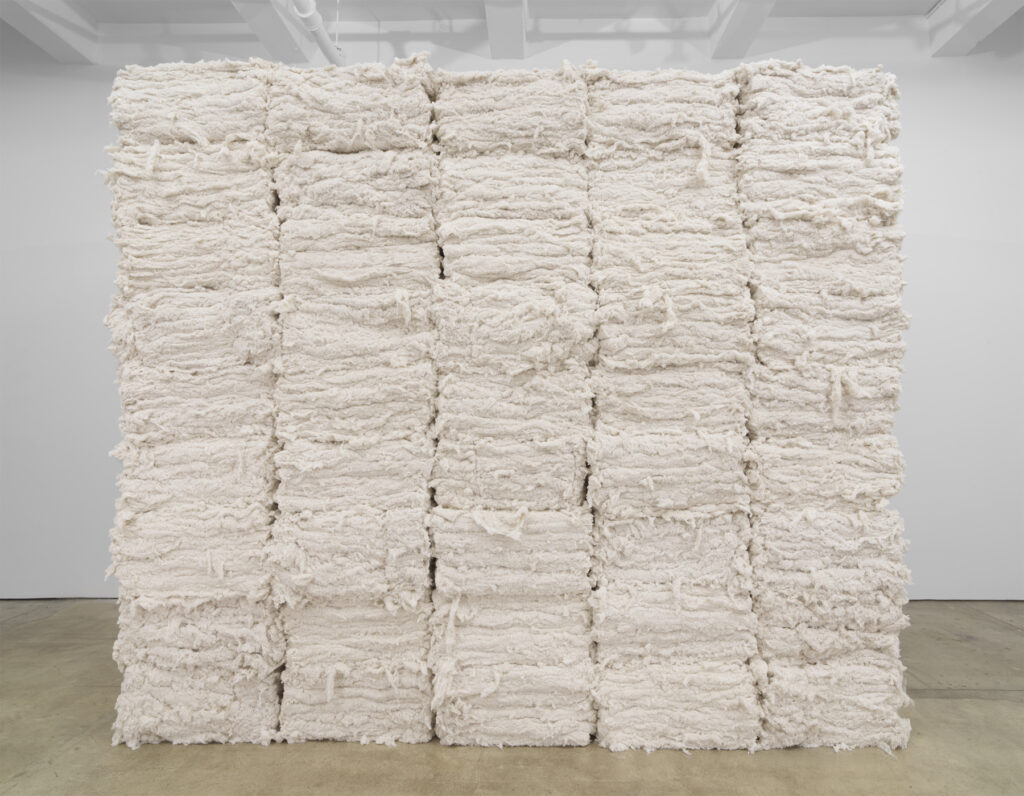
Number 363, 2023
Cotton and matte medium
115 × 138 × 52 in. (292.1 × 350.5 × 132.1 cm)
Filed Under:
Leonardo Drew
(b. 1961, Tallahassee, Florida; lives in Brooklyn)
Drew is perhaps best known for his large-scale sculptural works that utilize seemingly found materials—wood, rusted metal, cotton, rope, textile—that are in fact new. Drew “become[s] the weather,” burning, rusting, and dirtying these materials until they appear used and aged, subverting the viewer’s conception of time. He then compresses these materials into gridlike structures, creating a sort of organized chaos. Each work can be read as a record of the artist’s labor. Drew has put himself into the work.
For MONUMENTS, he revisits a seminal piece from his career, Untitled #25 (1992), in a new context. Number 363 (2023) combines the formal language of modernism and post-Minimalism with a material that harkens back to America’s origins and propelled the expansion of capitalism. This work contrasts the historic (cotton bale) and the contemporary (geometric large-scale sculpture), the natural raw material and the industrial abstracted form. As with all of Drew’s work, the piece is assigned a numeric rather than descriptive title to avoid influencing the viewer’s interpretation of it. Similarly, the geometric form invites individualized and personalized conceptions, in stark contrast to the extremely specific and evocative material. Though Number 363 appears uniform and mechanically produced, it was painstakingly handmade in Drew’s studio from 900 pounds of cotton, unrolled and compressed layer by layer over the course of weeks.
Cotton, particularly in its unprocessed form, cannot be disentangled from the history and legacy of slavery. The bale is inherently industrial, allowing for large-scale production and efficient storage and movement of organic goods. The antebellum South’s agrarian economy relied on cotton, and the burgeoning Industrial Revolution required immense amounts of human labor to pick the crop before it could be processed by machines, spurring an exponential growth in the population of enslaved people in the United States. Two and a half centuries later, cotton remains a charged symbol of the brutality inherent in the institution of chattel slavery. In working with it, Drew addresses this history head-on and reclaims the material for his own, eschewing the notion that abstraction is incompatible with social practice.
Unlike most of Drew’s mixed-media work, Number 363 can be approached in the round. Standing 9 1/2 feet tall and nearly 11 1/2 feet wide, its monumentality is a testament to the labor of enslaved African Americans that generated the wealth upon which this country was built.
Leonardo Drew
Leonardo Drew (b. 1961, Tallahassee, Florida, USA) is known for his significant installations and sculptures which explore the tension between order and chaos. Drew transforms accumulations of raw materials such as wood, scrap metal and cotton to create works that play upon a tension between order and chaos. His surfaces often approach a language of their own, embodying the laboured process of writing oneself into history.
Drew’s work has been seen in major museums worldwide. He was commissioned for a new outdoor project City in the Grass for Madison Square Park in 2019, marking the Madison Square Park Conservancy’s 38th public commission and the artist’s first major public outdoor art project. City in the Grass was presented as a solo exhibition in three museums, the Wadsworth Atheneum Museum of Art, Hartford, Connecticut (2021); Mississippi Museum of Art, Jackson (2020); and North Carolina Museum of Art, Raleigh (2020). In 2022, Drew was elected as a National Academician by the National Academy of Design. Another major new commission featured at Yorkshire Sculpture Park, UK in 2023. Drew’s mid-career survey, Existed, premiered at the Blaffer Gallery at the University of Houston in 2009 and travelled to the Weatherspoon Art Museum in Greensboro, North Carolina, and the DeCordova Sculpture Park and Museum in Lincoln, Massachusetts.
Collections include: Tate, London; Metropolitan Museum of Art, New York; Museum of Modern Art, New York; The Museum of Contemporary Art, Los Angeles; The Hirshhorn Museum and Sculpture Garden, Washington, D.C.; and Baltimore Museum of Art, Baltimore, MD.
Instagram: @leonardodrewstudio

Number 363, 2023
Cotton and matte medium
115 × 138 × 52 in. (292.1 × 350.5 × 132.1 cm)
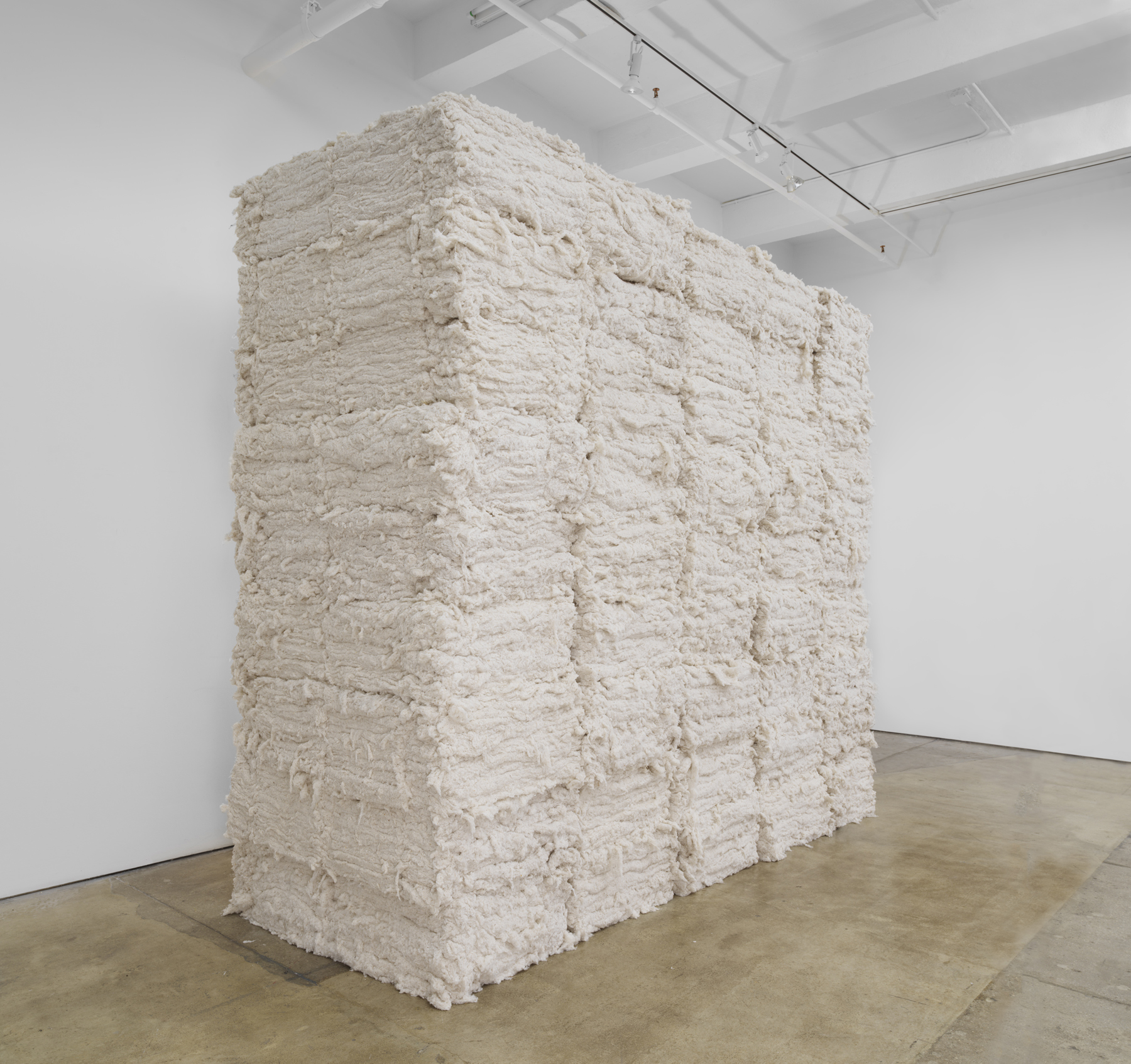
Number 363, 2023
Cotton and matte medium
115 × 138 × 52 in. (292.1 × 350.5 × 132.1 cm)
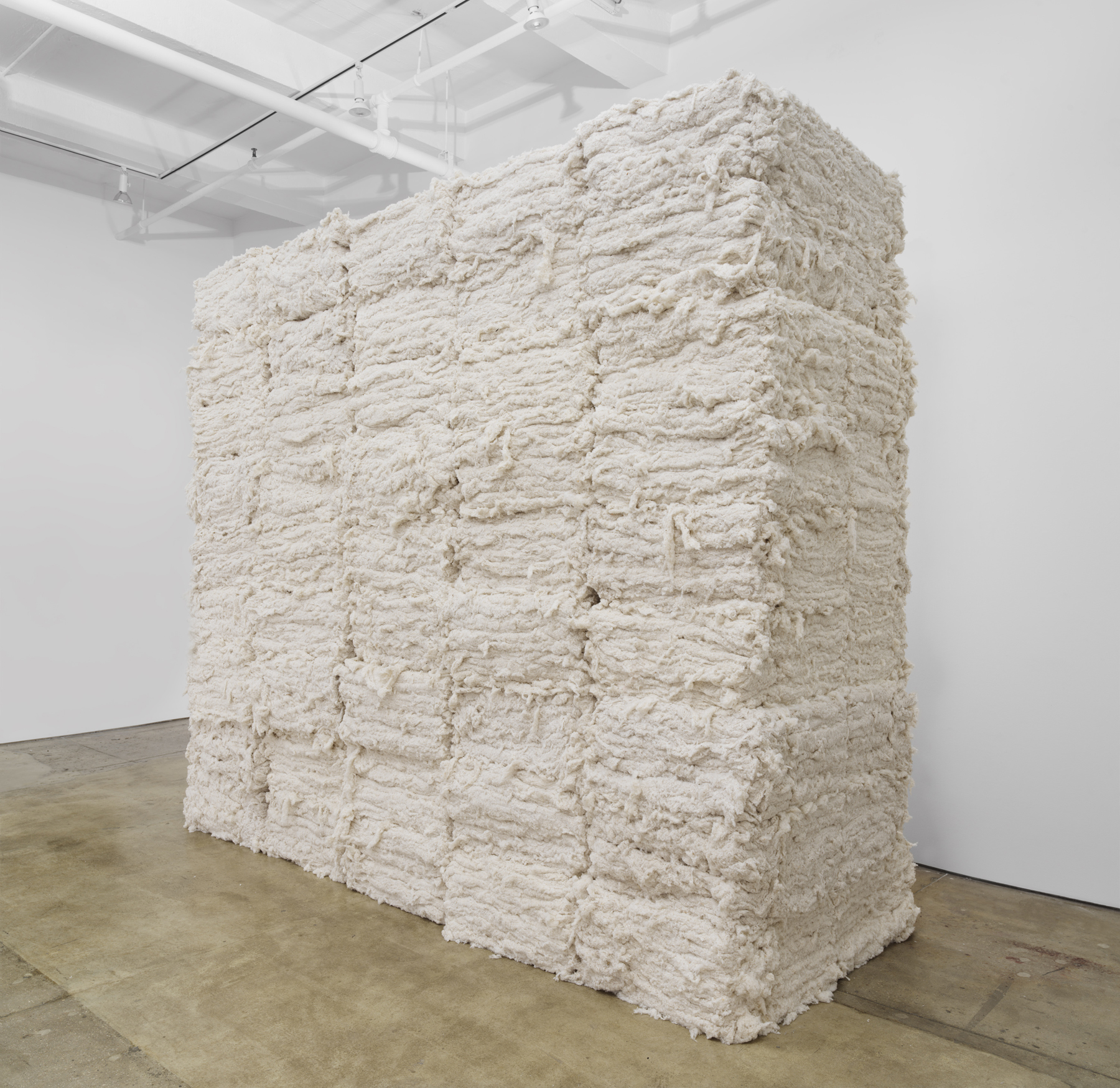
Number 363, 2023
Cotton and matte medium
115 × 138 × 52 in. (292.1 × 350.5 × 132.1 cm)
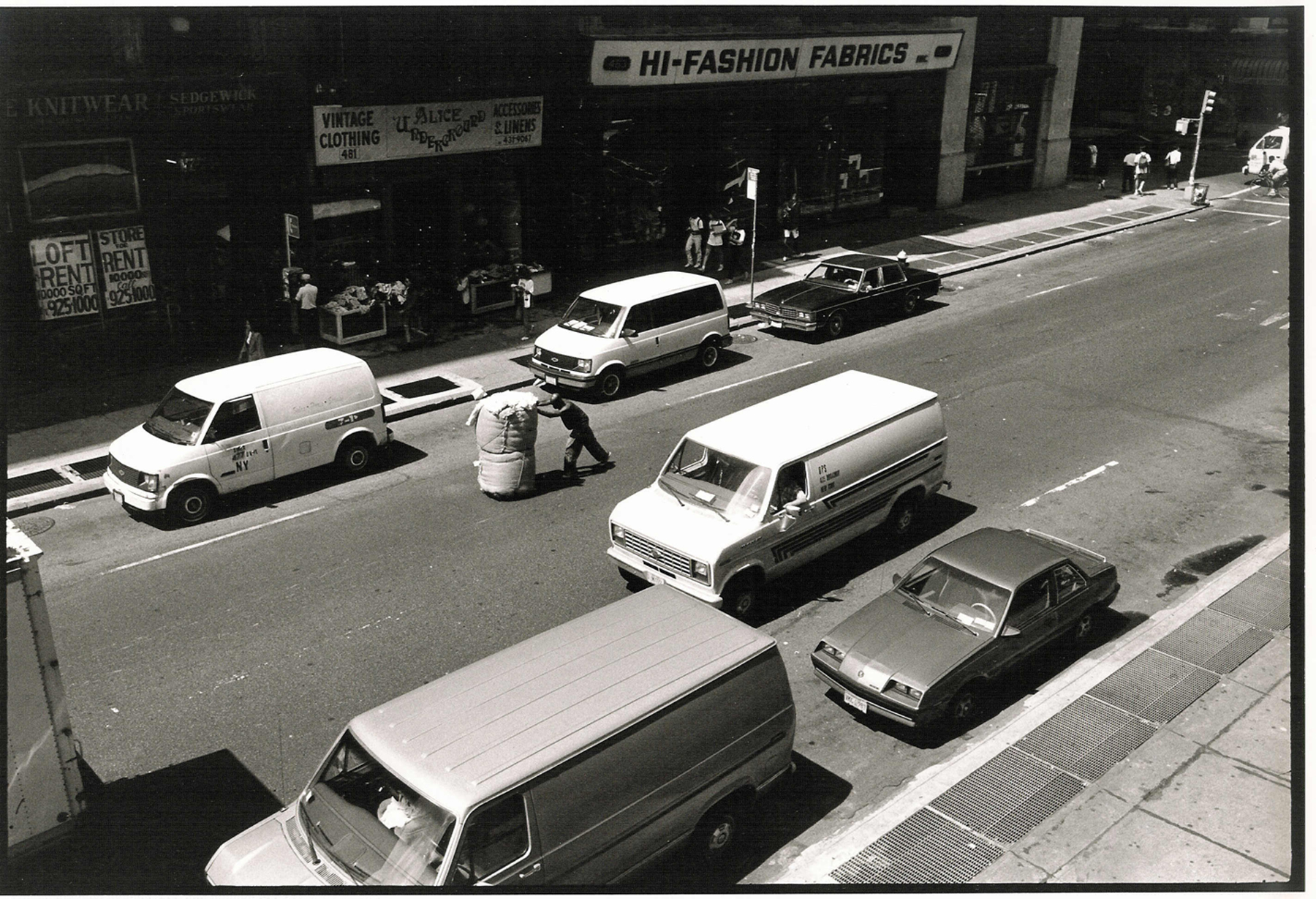
Leonardo Drew moving cotton to his studio in the early 1990s
Courtesy of the artist
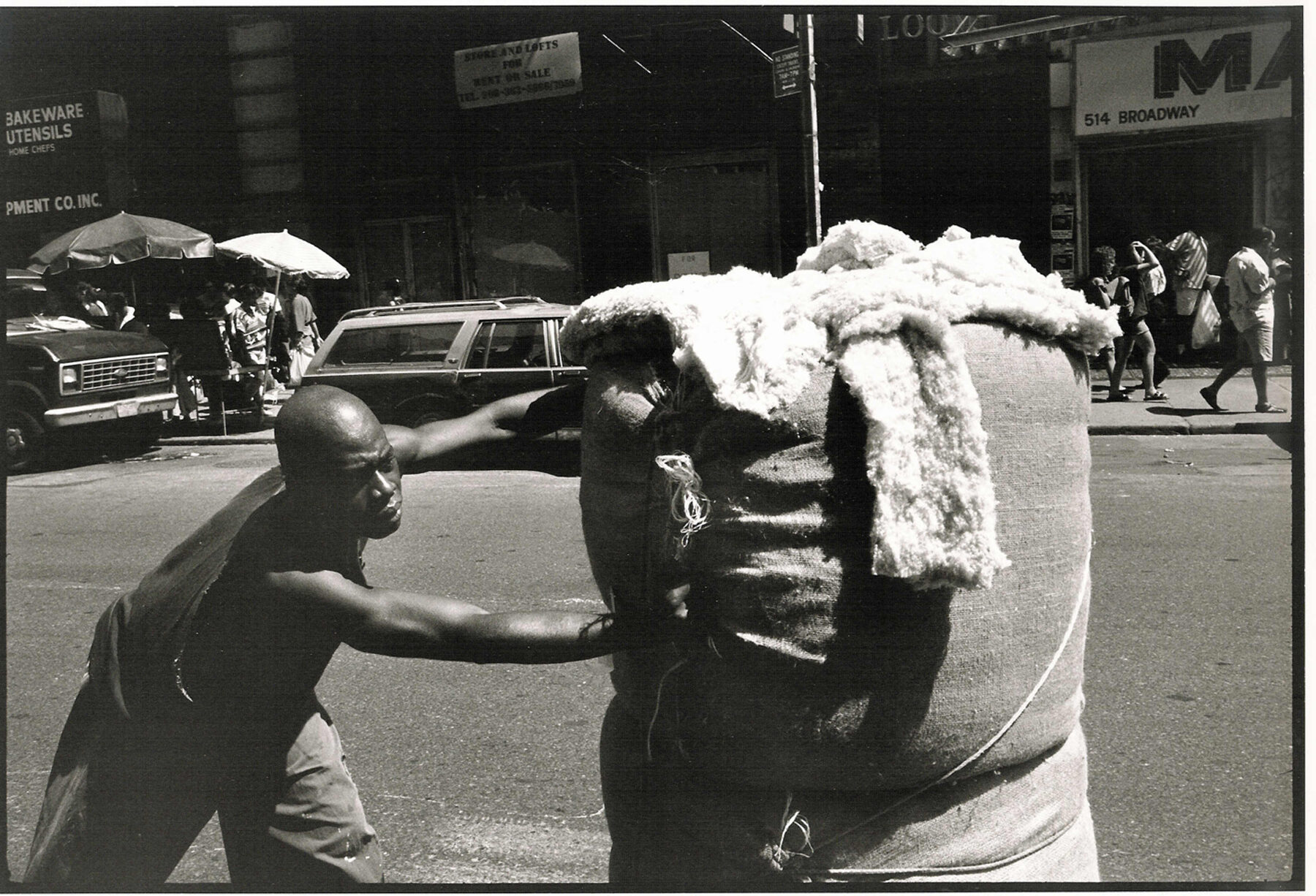
Leonardo Drew moving cotton to his studio in the early 1990s
Courtesy of the artist
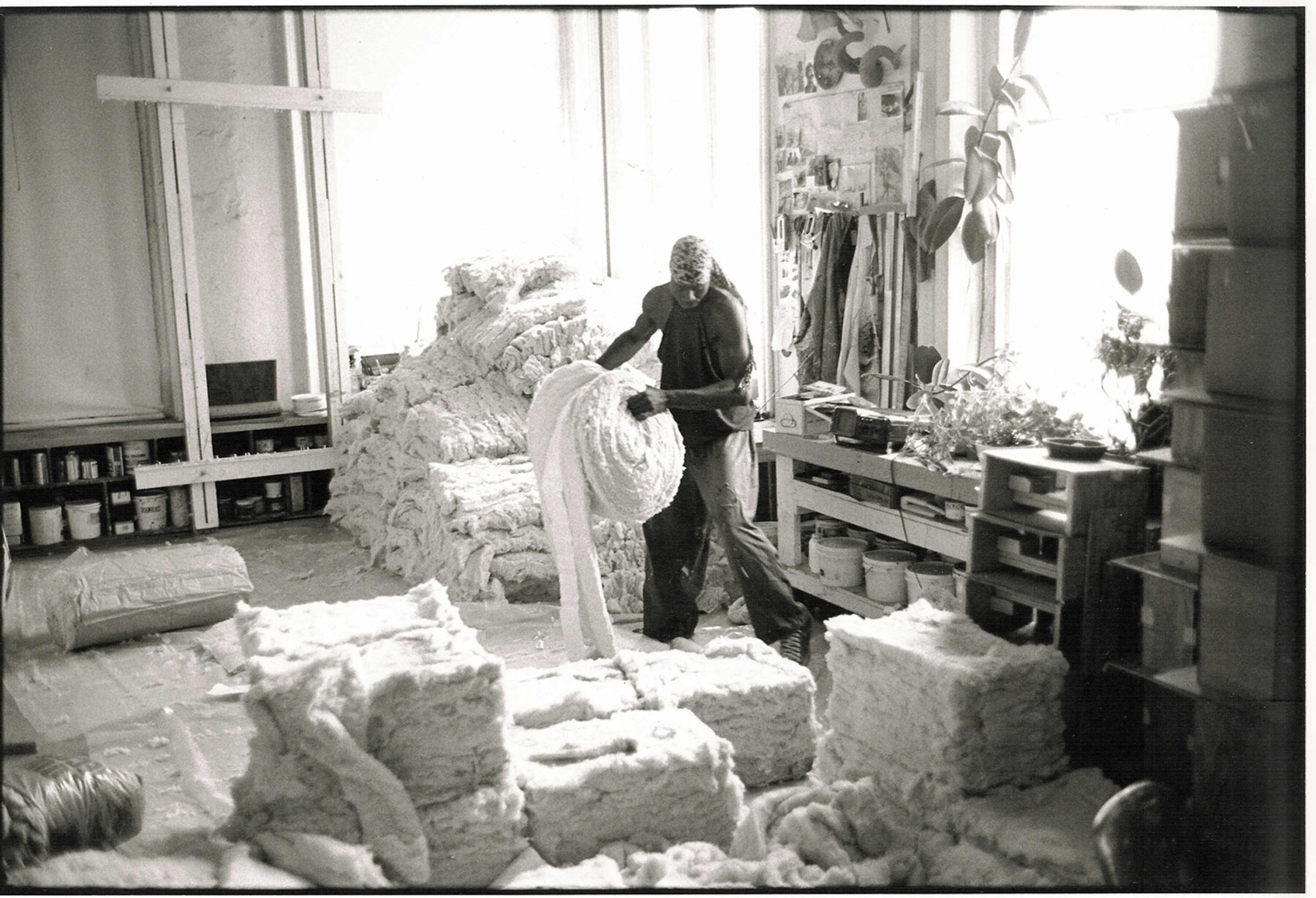
Leonardo Drew working with cotton in his studio in the early 1990s
Courtesy of the artist