

Stranger Fruit Series

Jon Henry, Untitled #31, Wynwood, FL, 2017
Filed Under:
Jon Henry
(b. 1982, Queens, New York; lives in Brooklyn)
In the Stranger Fruit series, photographer Jon Henry invites the viewer to meditate on loss and sacrifice. Henry asked Black mothers and their sons to adopt the pose of the Pietà, a compositional form in Christian iconography that depicts a mourning Virgin Mary cradling the lifeless body of Jesus Christ after his descent from the cross. Though Christ’s death was a necessary atonement for the sins of mankind, Mary has lost a son. Henry’s photographs cut to the core of the Pietà, employing it to reflect on the killing of Black men by law enforcement specifically and the pathos of a mother’s concern for the wellbeing of her children more broadly. As an illustration of this sacred bond, one need only remember that in his final moments, George Floyd called out to his mother.
The series began in 2014 following the police killings of several Black men between August and November, including Michael Brown and Laquan McDonald. Henry asked his subjects to pose at locations near their homes—front yards, churches, freeway underpasses, parking lots, schools—and took two to three photographs of each family. In these intimate portraits, the Pietà composition imbues the mother-son relationship with an aura of holiness and underscores the fragility of Black lives in public spaces. As national attention to the disproportionate police killings of Black people grows, so does the list of unsafe activities—walking home (Elijah McClain), playing at the park (Tamir Rice), driving a car (Philando Castile, Tyre Nichols), watching TV (Botham Jean).
In the wake of highly publicized incidents of extrajudicial killings of Black people, the families of victims are thrust into the spotlight. Like Mamie Till-Mobley, who insisted on an open-casket funeral for her lynched son Emmett in order to “let the world see what they did to my boy,” mothers such as Sybrina Fulton (Trayvon Martin), Lesley McSpadden (Michael Brown), and Gwen Carr (Eric Garner) have tirelessly channeled their grief into activism for criminal-justice reform.
In MONUMENTS, Stranger Fruit dialogues with the Confederate Women of Maryland monument, which similarly uses the Pietà to evoke the sacrifice of women who sent sons, husbands, and brothers off to war. Confederate soldiers, whether willingly or not, and despite the claims of Lost Cause mythology, fought in defense of slavery. While Confederate families were torn apart during the Civil War, they battled to protect an institution rooted in the destruction of enslaved families. Henry’s series highlights the ongoing racism that renders daily life precarious for Black Americans and the ever-present fear shadowing the lives of Black mothers that their sons will die at the hands of police.
Jon Henry
Jon Henry is a visual artist working with photography and text, from Queens NY (resides in Brooklyn). His work reflects on family, sociopolitical issues, grief, trauma and healing within the African American community. His work has been published both nationally and internationally and exhibited in numerous galleries including Aperture Foundation, Smack Mellon, and BRIC among others. Known foremost for the cultural activism in his work, his projects include studies of athletes from different sports and their representations.
He was recently named one of The 30 New and Emerging Photographers for 2022, TIME Magazine NEXT100 for 2021. Included in the Inaugural 2021 Silver List. He recently was awarded the Arnold Newman Grant for New Directions in Photographic Portraiture in 2020, an En Foco Fellow, one of LensCulture’s Emerging Artists and has also won the Film Photo Prize for Continuing Film Project sponsored by Kodak.

Untitled #42, Central Los Angeles, CA, 2019
Digital archival print on matte paper
30 × 24 in. (76.2 × 61 cm) unframed
Courtesy of the artist

Untitled #49, Washington DC, 2019
Digital archival print on matte paper
30 × 24 in. (76.2 × 61 cm) unframed
Courtesy of the artist

Untitled #55, Little Rock, AR, 2020
Digital archival print on matte paper
30 × 24 in. (76.2 × 61 cm) unframed
Courtesy of the artist

Untitled #61, Omaha, NE , 2020
Digital archival print on matte paper
30 × 24 in. (76.2 × 61 cm) unframed
Courtesy of the artist

Untitled #10, Flushing, NY, 2014
Digital archival print on matte paper
30 × 24 in. (76.2 × 61 cm) unframed
Courtesy of the artist
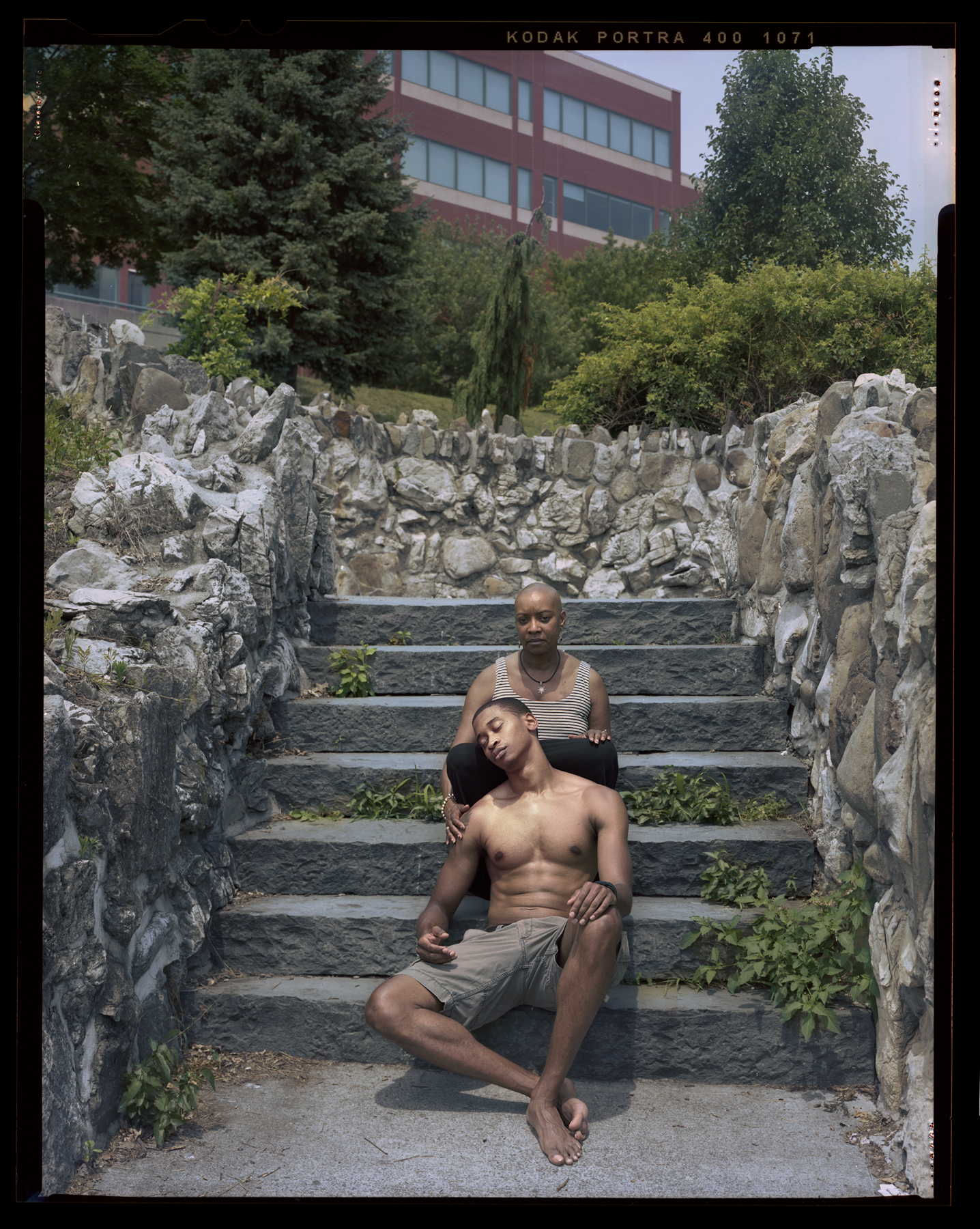
Untitled #9, Newburgh, NY, 2015
Digital archival print on matte paper
30 × 24 in. (76.2 × 61 cm) unframed
Courtesy of the artist

Untitled #11, Buffalo, NY, 2015
Digital archival print on matte paper
30 × 24 in. (76.2 × 61 cm) unframed
Courtesy of the artist

Untitled #15, South Side Chicago, IL, 2016
Digital archival print on matte paper
30 × 24 in. (76.2 × 61 cm) unframed
Courtesy of the artist

Untitled #23, Cabrini Green, IL, 2016
Digital archival print on matte paper
30 × 24 in. (76.2 × 61 cm) unframed
Courtesy of the artist

Untitled #19, Magnificent Mile, IL, 2016
Digital archival print on matte paper
30 × 24 in. (76.2 × 61 cm) unframed
Courtesy of the artist

Untitled #29, North Miami, FL, 2017
Digital archival print on matte paper
30 × 24 in. (76.2 × 61 cm) unframed
Courtesy of the artist

Untitled #31, Wynwood, FL, 2017
Digital archival print on matte paper
30 × 24 in. (76.2 × 61 cm) unframed
Courtesy of the artist

Untitled #35, North Minneapolis, MN, 2019
Digital archival print on matte paper
30 × 24 in. (76.2 × 61 cm) unframed
Courtesy of the artist

Untitled #39, Santa Monica, CA, 2019
Digital archival print on matte paper
30 × 24 in. (76.2 × 61 cm) unframed
Courtesy of the artist