

Deo Vindice (Orion's Cabinet)
Filed Under:
Abigail DeVille
(b. 1981, New York, New York; lives in New York, New York)
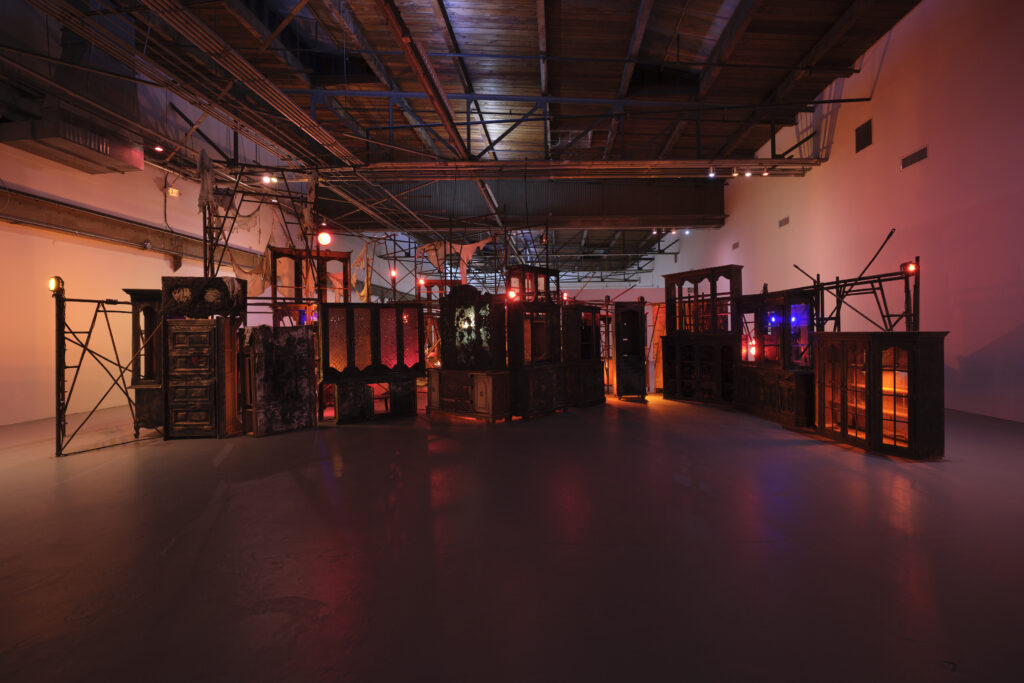
Abigail DeVille creates immersive sculptural installations, often with found material, that gesture to both the past and the future, placing historical events within a larger, even cosmological context. In Deo Vindice (Orion’s Cabinet), DeVille, whose family moved to New York from Virginia during the Great Migration, constructs a meditation on the fall of Richmond at the end of the Civil War. In early April 1865, it became clear that Union forces would capture Richmond, the capital city and industrial center of the Confederacy. To prevent the munitions and railway foundry, Tredegar Iron Works, from falling into Union hands, fleeing Confederate officials ordered the city burned. Less than a week later, Robert E. Lee would surrender to Ulysses S. Grant at Appomattox and the war would officially be declared over. Photographs taken in the aftermath of the blaze document Richmond’s devastation, reduced to ruins at the hands of its political leaders.
DeVille’s installation was inspired by these photographs. At its heart are clusters of colonial-style curio cabinets that have been charred to resemble the firebombed structures of Richmond in the final days of the Civil War. Though these cabinets and their contents were once a symbol of status, they have since been relegated to generic Americana of a bygone era. Here Deville deploys them metaphorically: like a curio cabinet that protects family heirlooms from collecting dust, Lost Cause ideology has sheltered and enshrined distorted versions of historical memory, ensuring their survival despite the decades of scholarship disproving them.
The myth of the Lost Cause contends that the South’s secession and the ensuing war had nothing to do with preserving slavery. Rather, bloodshed was necessary to protect the Southern homeland from a tyrannical federal government. Confederates are thus cast as protectors of Southern women and children, courageous soldiers who fought in spite of the overwhelming odds against them, not cruel enslavers defending the right to own other human beings. Confederate leaders claimed divine dispensation to safeguard the South, invoked in the motto of the Confederate States of America, “Deo Vindice.” Adopted in 1863 when the Confederate Congress approved the design of an official seal, the Latin phrase is open to interpretation. It can mean “With God as Our Defender” or “God Will Avenge.” In MONUMENTS, DeVille’s installation dialogues with the allegorical figure of Vindicatrix that crowned the Jefferson Davis monument in Richmond (dismantled 2020), with the motto inscribed beneath her feet. In this context, where it can be translated as “God Will Vindicate,” it is a short step to the rallying cry of revanchist forces: “the South will rise again.” DeVille counters with a Lost Cause repository in ashes.
Deo Vindice (Orion’s Cabinet) signifies the domestic space in which the Lost Cause has thrived. The cabinets of DeVille’s installation belong to the domestic space just as memory preservation falls squarely within the realm of women’s work, especially as it pertains to the education of children and the transmission of “heritage” from generation to generation. The most vociferous propagators of Lost Cause mythology are the United Daughters of the Confederacy (UDC). Founded in 1894, the UDC built public monuments, distributed catechisms, and successfully lobbied for history textbooks that were sympathetic to the South. Since 1911, it has maintained the Children of the Confederacy auxiliary group, whose stated purposes include “to honor and perpetuate the memory and deeds of high principles of the men and women of the Confederacy” and “to serve society through civic affairs and to perpetuate National patriotism as our ancestors once defended their beliefs.” Membership begins in infancy and extends to the age of eighteen.
DeVille has arranged the cabinet clusters to mark the primary stars of the constellation Orion. The Greek mythological figure Orion the Hunter angered the Earth goddess Gaia when he set out to kill every animal on earth. The cabinet clusters are connected by cloth-draped scaffolding of the type used in monument restoration, which is often funded with public revenue. DeVille here draws the link between the enslavers’ desire to maintain hegemonic power—over resources, over historical narrative, over public discourse—and their view of enslaved people as subhuman, the corrosive white nationalism that undergirds the entire enterprise. Though Richmond was burned on the order of Confederate leaders, much of the generation of white Southerners who grew up during the Reconstruction era felt that they had been robbed of their birthright, their victimhood calcified in fire—a belief that continues to stoke present-day white grievances.
Abigail DeVille
Abigail DeVille’s work is currently on view in the group exhibition MONUMENTS at the Geffen Contemporary at MOCA and The Brick, Los Angeles. Her most recent solo exhibitions include, Prospect 6: The Future is Present, The Harbinger is Home, New Orleans, LA (2024); In the Fullness of Time, Bowdoin College Museum of Art, Brunswick, ME (2024); In the fullness of time, the heart speaks truths too deep for utterance, but a star remembers, JTT, NYC (2023); Original Night, Eric Firestone Gallery, NYC (2022-23); Bronx Heavens, Bronx Museum of the Arts, The Bronx, NY (2022-23); Light of Freedom, organized by Madison Square Park Conservancy, NYC (2020-21), which traveled to the Momentary at Crystal Bridges Museum of American Art, Bentonville, AR (2021), Hirshhorn Museum Sculpture Garden, Washington, DC (2021-22), and Kenyon College, Gambier, OH (2023-24); The American Future, Portland Institute for Contemporary Art, Portland, OR (2018-19); Empire State Works in Progress, Whitney Museum of American Art, NYC (2017); and No Space Hidden (Shelter), Institute of Contemporary Art, Los Angeles, CA (2017-2018).
DeVille has received numerous awards and honors including being named a 2025 New York City Artadia Award recipient, a 2024–25 Hodder Fellow at Princeton, a 2024 Bogliasco Fellow, a recipient of the 2018 Anonymous Was a Woman Award, a 2018 United States Artists Fellow, a 2017–18 Rome Prize Fellow at the American Academy in Rome, a 2015 Creative Capital Grantee, a 2014–15 Fellow at The Radcliffe Institute for Advanced Study at Harvard, the 2015 Obie Award for Design for Prophetika: An Oratorio (La MaMa), a 2013–14 Artist in Residence at The Studio Museum in Harlem, and a 2012 Joan Mitchell Foundation Grant recipient. DeVille received her MFA from Yale University and BFA from the Fashion Institute of Technology.
Instagram: @victoriouspurple
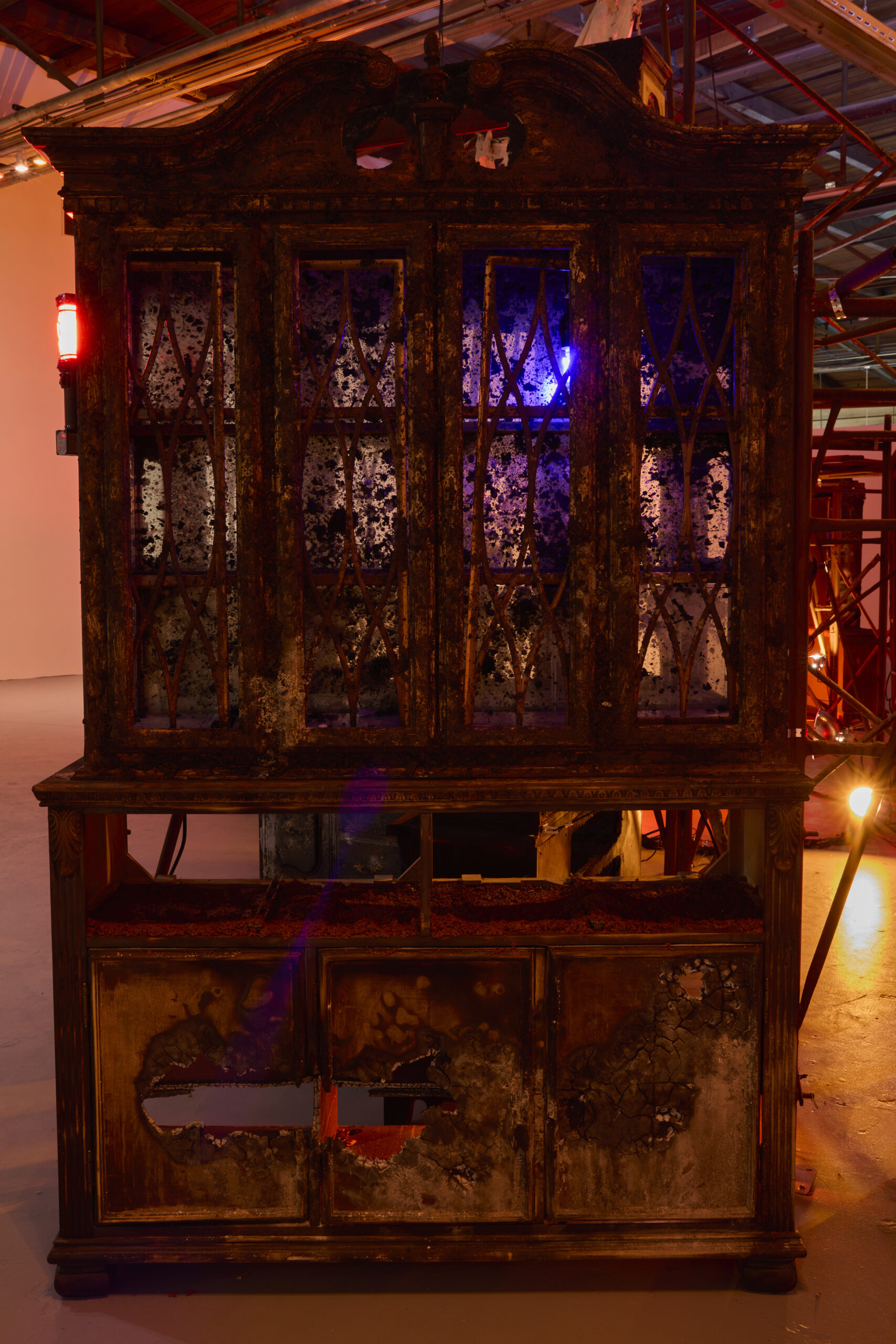
Deo Vindice (Orion's Cabinet)(detail), 2025
Photo by Frederik Nilsen
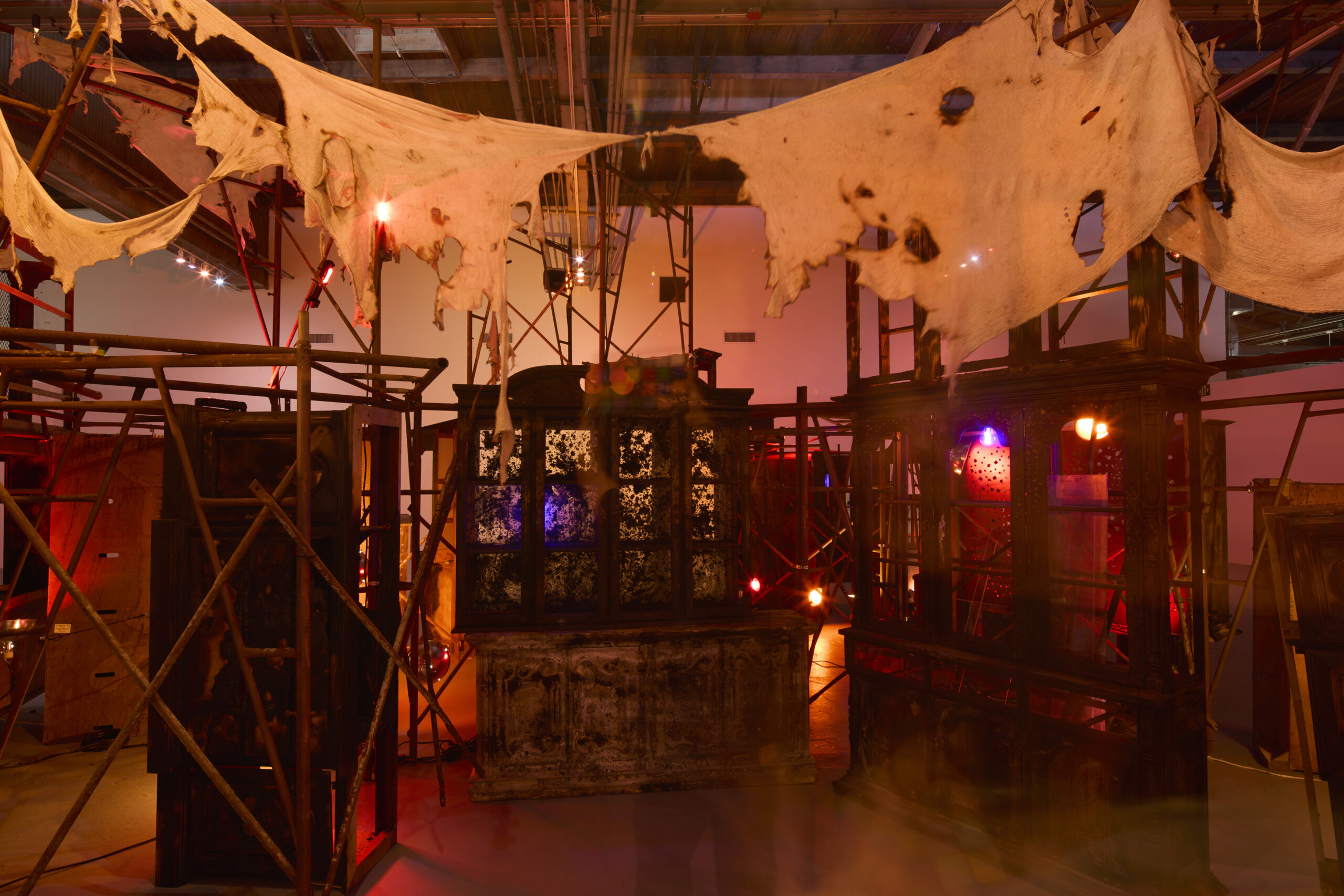
Deo Vindice (Orion's Cabinet)(detail), 2025
Photo by Frederik Nilsen
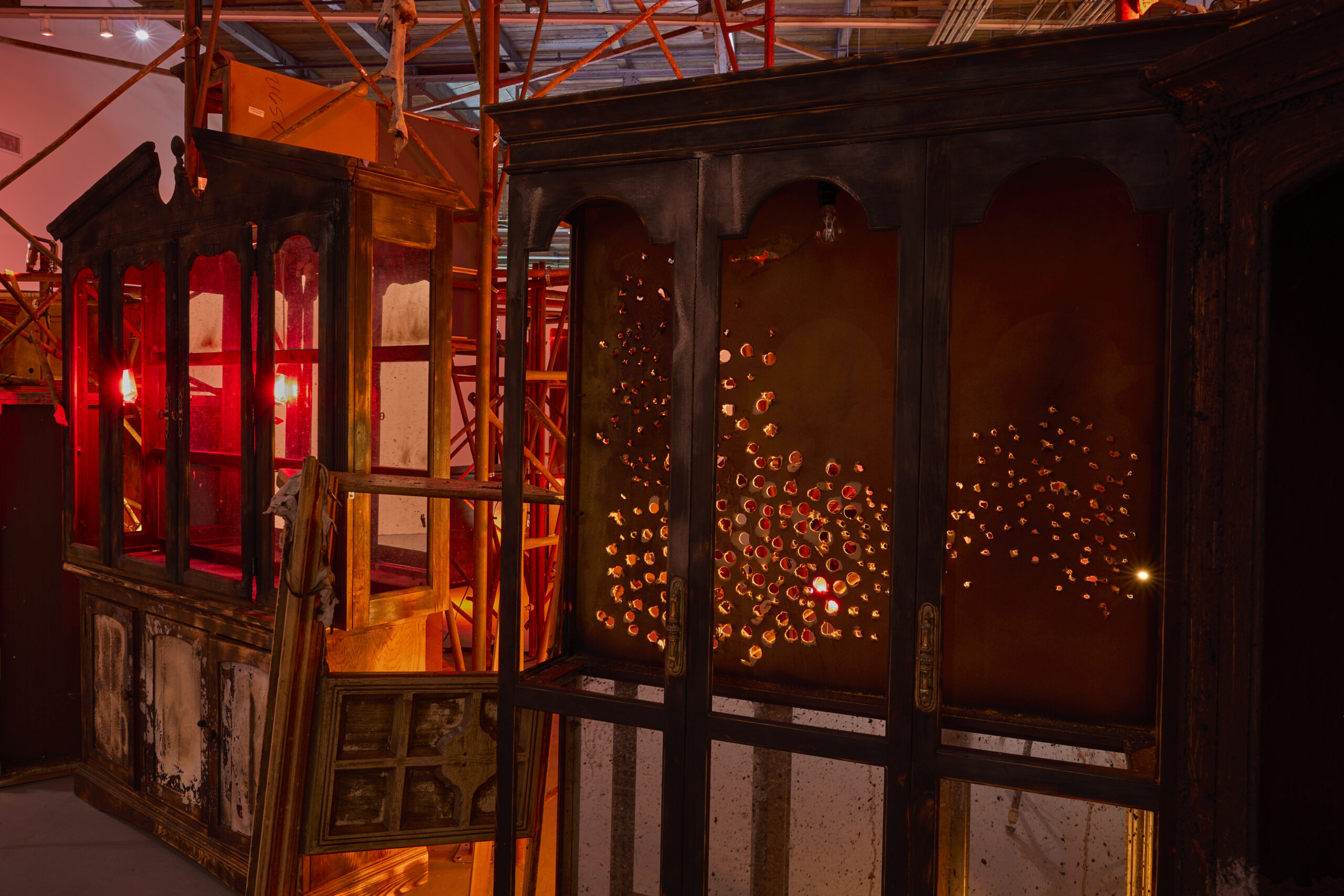
Deo Vindice (Orion's Cabinet)(detail), 2025
Photo by Frederik Nilsen
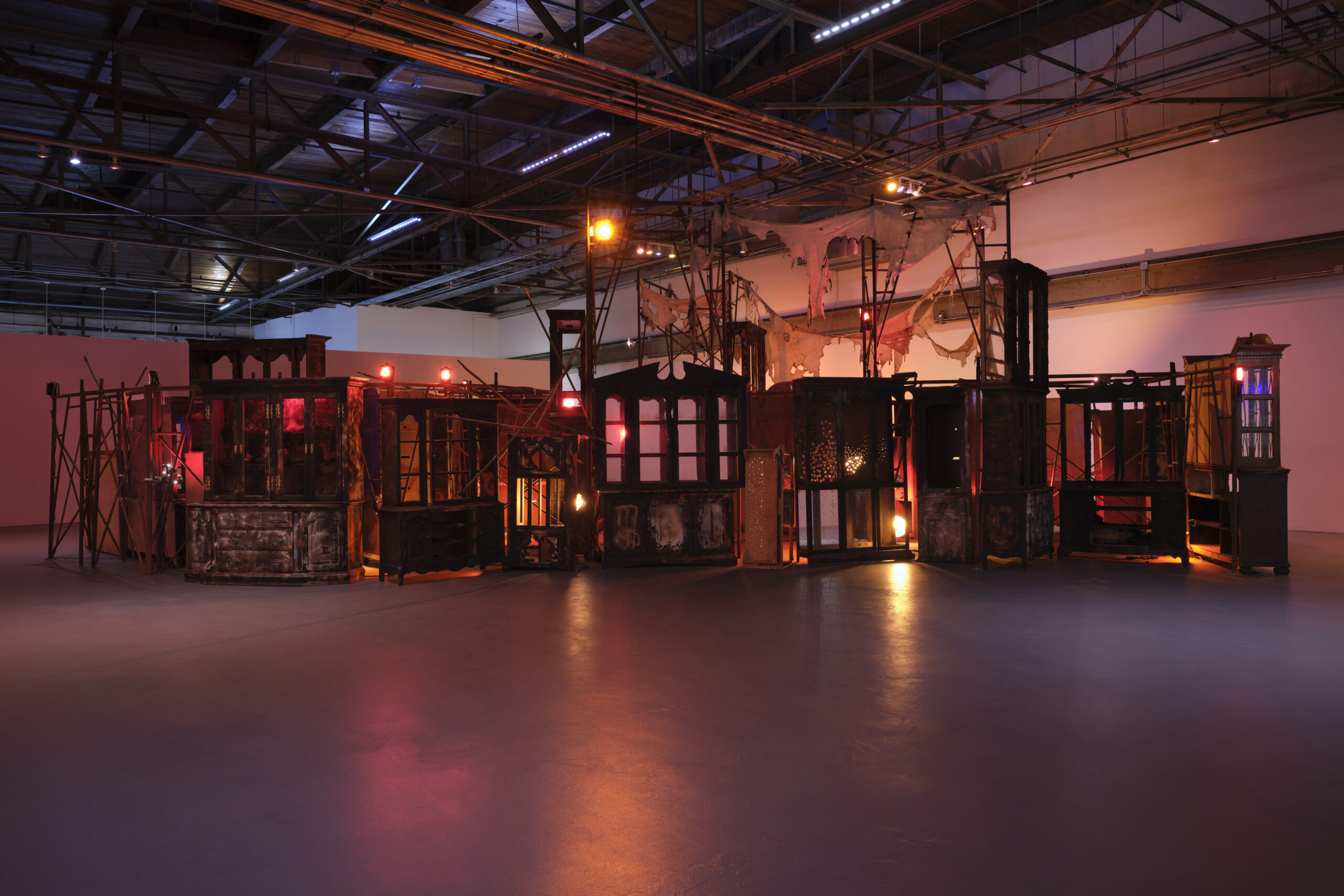
Deo Vindice (Orion's Cabinet), 2025
Photo by Frederik Nilsen
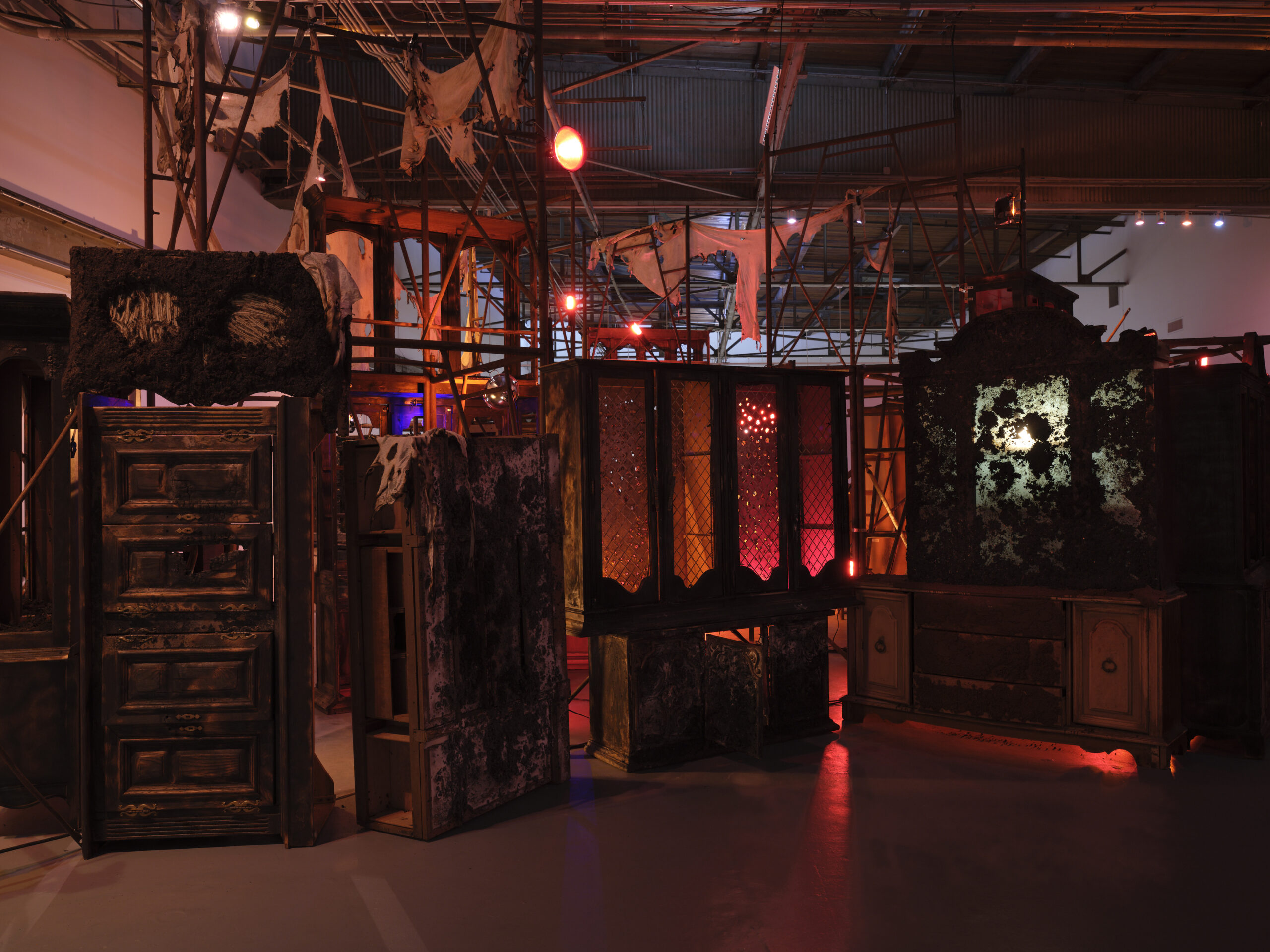
Deo Vindice (Orion's Cabinet)(detail), 2025
Photo by Frederik Nilsen
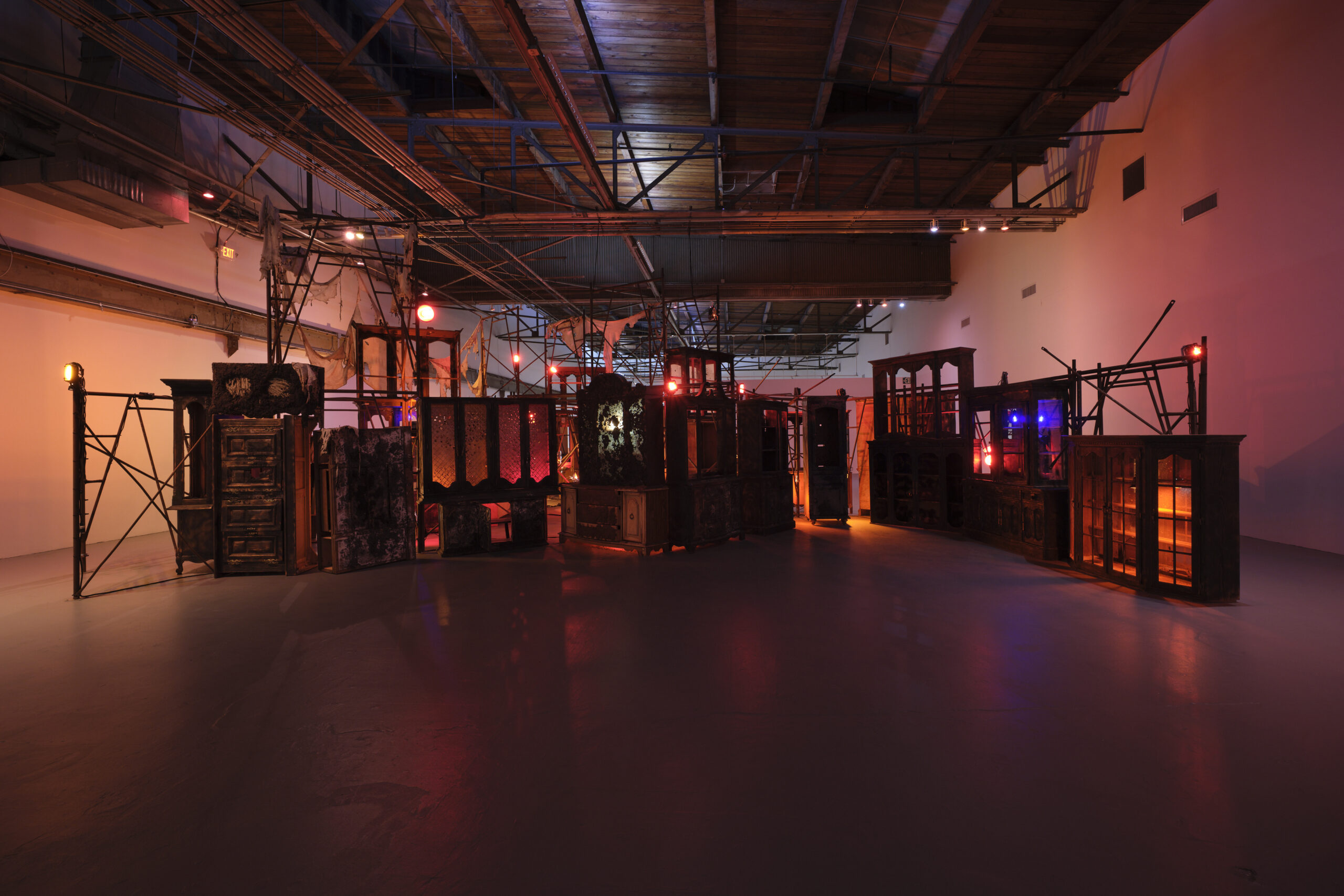
Deo Vindice (Orion's Cabinet), 2025
China cabinets, charcoal, rusted steel scaffolding, pig blood, salt, mud, lights, and natural fiber
Dimensions variable
