

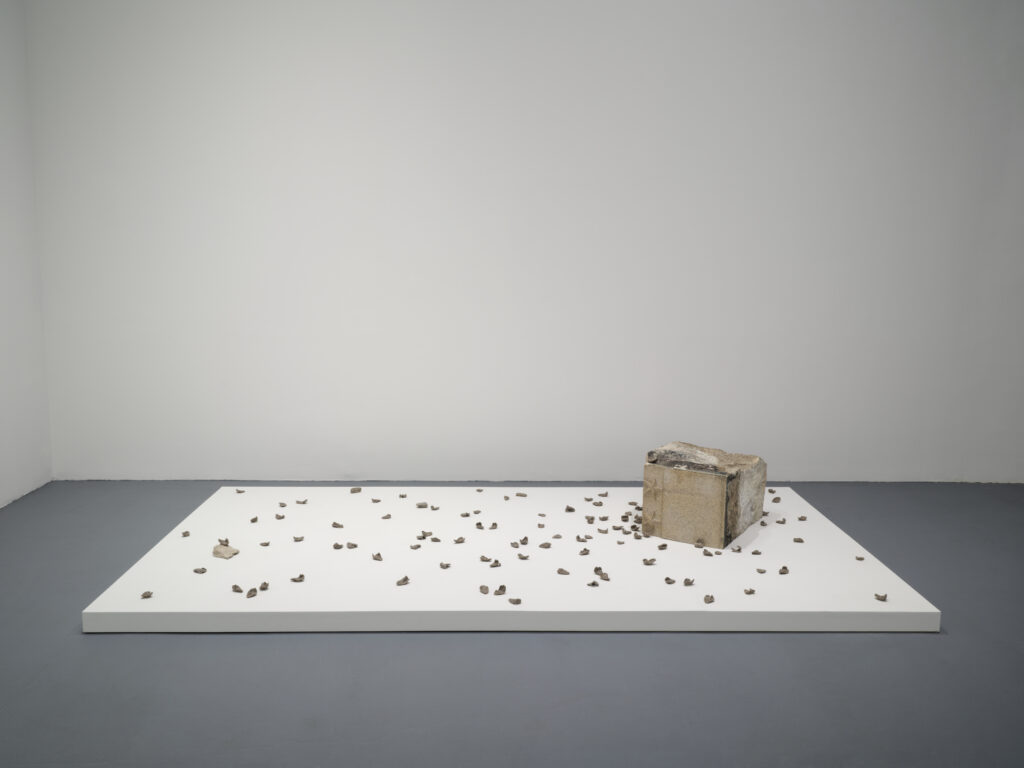
Love is dangerous
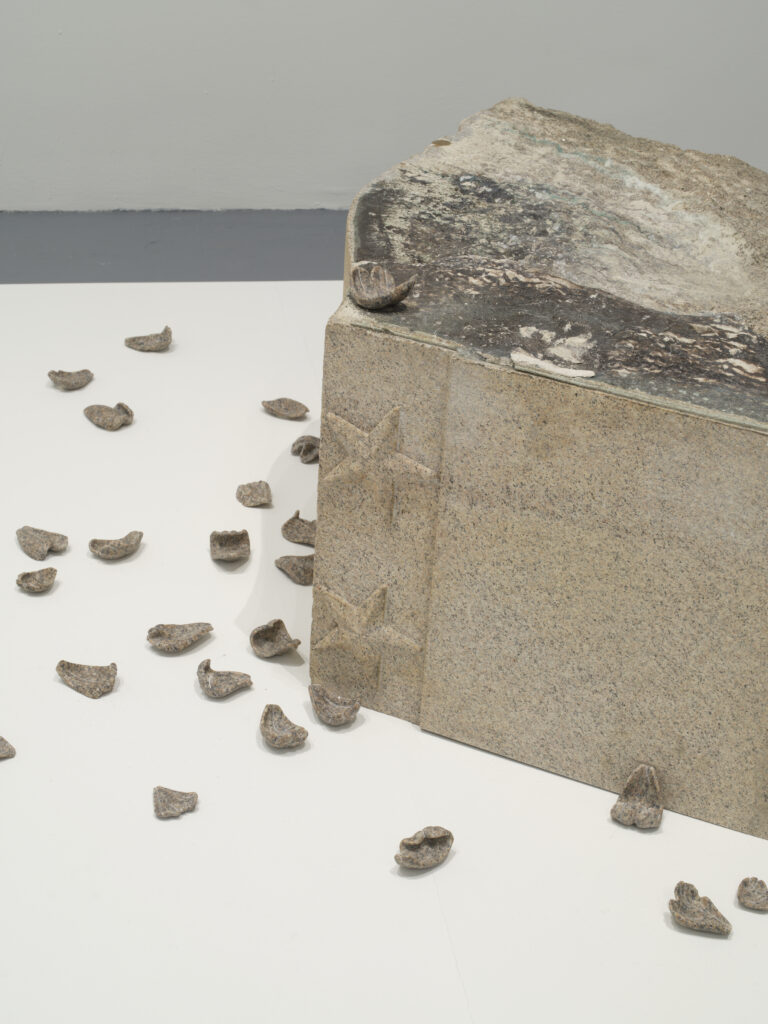
Love is dangerous, 2024-25
Pink granite from the decommissioned Thomas J. "Stonewall" Jackson monument, Charlottesville, Virginia
Re-carved by Sean Hunter Williams
18 x 174 x 96 in. (45.7 x 442 x 243.8 cm) approx.
Commissioned by MOCA & The Brick
Courtesy of the artist; Alexander Gray Associates, New York; and PATRON Gallery, Chicago
Filed Under:
Bethany Collins
(b. 1984, Montgomery, AL; lives in Chicago)
Love is dangerous, 2024-2025
Pink granite from the decomissioned Thomas J. “Stonewall” Jackson monument, Charlottesville, Virginia
Re-carved by Sean Hunter Williams
Commissioned by MOCA & The Brick
Bethany Collins works within the conceptual nature of language, often pointing to erasures, gaps, and absences. A native of Montgomery, Alabama, she has long engaged with Civil War memory, the legacy of chattel slavery, and the construction of race. As in America: A Hymnal or Southern Review, she plays with linguistic, notational, and musical symbols of American national identity and how they have been adapted time and again in service of a specific ideology or cause. For MONUMENTS, Collins uses floriography, a Victorian-era practice of assigning meaning to particular flowers that would act as a form of encoded messaging between giver and receiver. For instance, roses of all varieties have traditionally been equated with love. One species, however, the Carolina Rose, with its prominent thorns, acquired a more ominous meaning: “love is dangerous,” a caution that serves as the title of Collins’s MONUMENTS commission.
Within the framework of floriography, the artist takes up the subject of the first Memorial Day. Beginning in the 1870s, Memorial Day came to be widely celebrated as a way of honoring the estimated 700,000 Americans who died during the Civil War—20% of all soldiers and approximately 2.5% of the U.S. population at the time. Memorial Day commemoration has long been credited to women’s groups, who adorned the graves of the fallen with wreaths, flowers, and flags—hence, the name by which such remembrance rituals were originally known: Decoration Day. According to research by historian David Blight, however, the origins of Memorial Day can be traced to an earlier event orchestrated by freed Black people in Charleston, South Carolina.
During the Civil War, the Washington Race Course and Jockey Club in Charleston was used as a Union POW camp, where the dead were unceremoniously dumped in mass graves. Following Confederate defeat in April 1865, formerly enslaved men and women transformed these graves into a proper cemetery, reburying the dead, whom they dubbed the “Martyrs of the Race Course.” On May 1, 1865, thousands of people paraded around the racetrack, including Black children newly enrolled in schools and 300 members of the Patriotic Association, a mutual aid society benefitting freedpeople organized by Black women. Marching to the tune of “John Brown’s Body,” the processioners carried baskets and armloads of flowers, wreaths, and crosses to the graves. As reported at the time, the graveyard was “one mass of flowers, not a speck of earth could be seen; and as the breeze wafted the sweet perfumes from them, outside and beyond . . . there were few eyes among those who knew the meaning of the ceremony that were not dim with tears of joy.”
Love Is Dangerous is made of granite taken from the base of a dismantled Stonewall Jackson monument formerly of Charlottesville, Virginia, thus transforming a stone that once honored a Confederate general and enslaver into a memorial to those who fought for freedom. Collins has made this transformation process visible—the rubble abutting the wall becomes finely carved rose petals that spill forth toward the viewer. Though the granite petals take up roughly the same area as their material did in its previous form, Collins’s installation, dedicated to a community of unnamed people, stands in stark contrast to the original monument’s vainglorious exaltation of a single man who fought to keep Black people in bondage. In substantiating a fragile and temporal object, the rose petal, into a hard and lasting stone, the artist asks us to rethink what and who is worth honoring and subverts the notion that monuments are permanent and unchanging elements of the American landscape. Love Is dangerous highlights the emotional weight of this first Memorial Day, at once a celebration of freedom and a mourning of the lost human life that it required.
Bethany Collins
Bethany Collins is a multidisciplinary artist whose conceptual practice examines the relationship between race and language. Centering language—its biases, contradictions, and ability to simultaneously forge connections and foster violence—her works illuminate America’s past and offer insight into the development of racial and national identities. Drawing on a wide variety of documents, ranging from nineteenth-century musical scores to US Department of Justice reports, she erases, obscures, excerpts, and rewrites portions of text to bring to the fore issues revolving around race, power, and histories of violence.

Love is dangerous
Photo by Frederik Nilsen
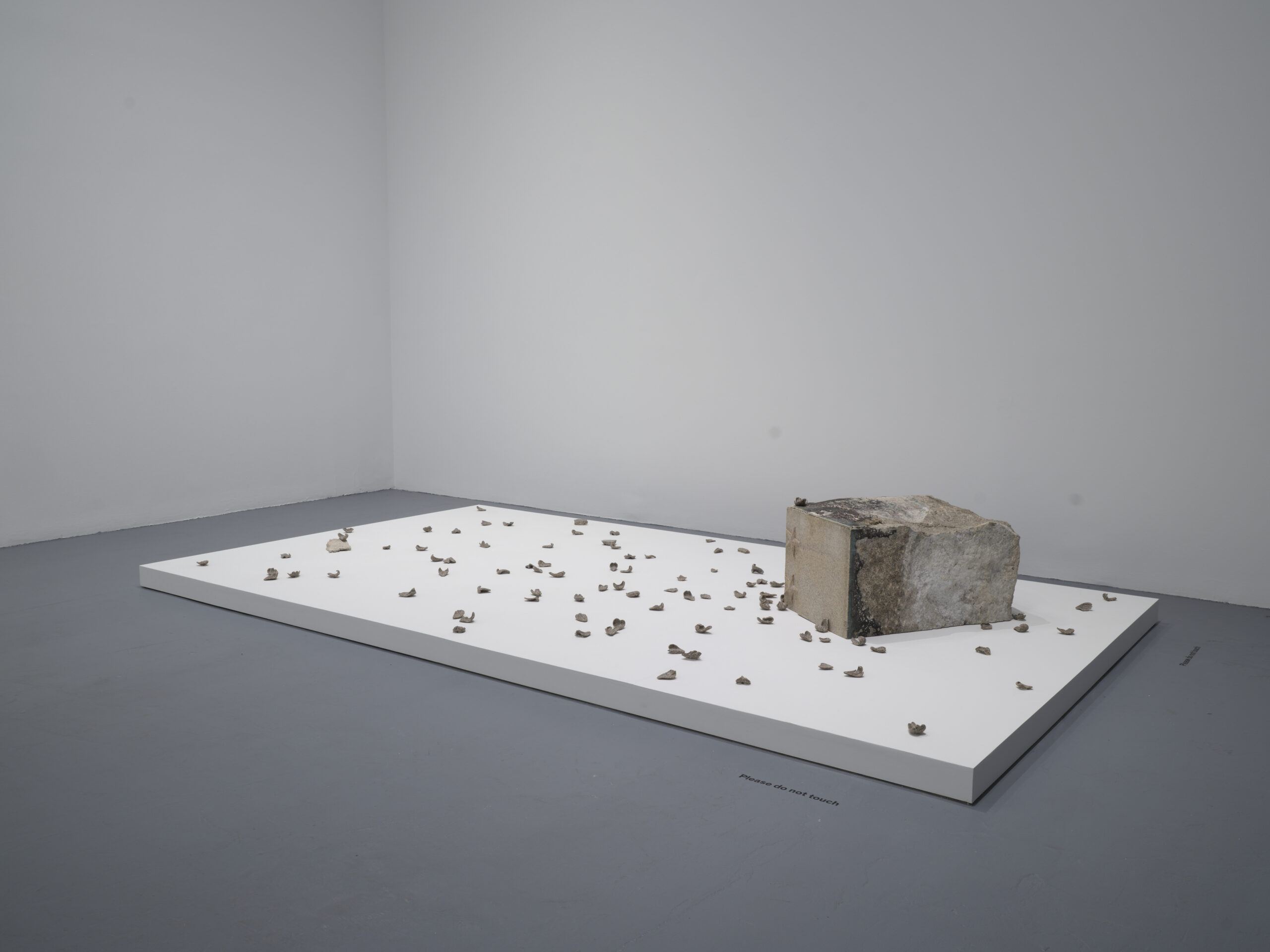
Love is dangerous
Photo by Frederik Nilsen
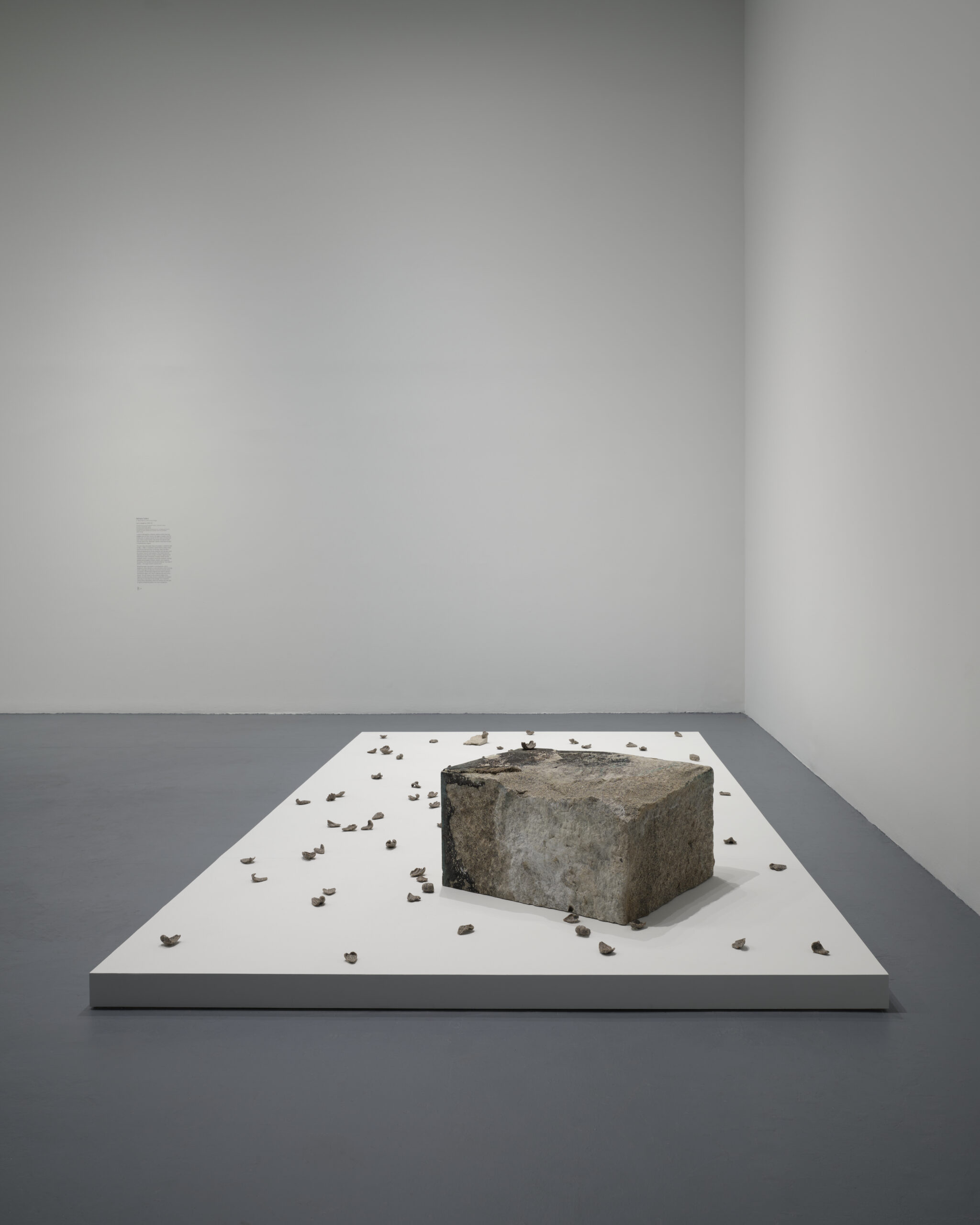
Love is dangerous (installation view)
Photo by Frederik Nilsen
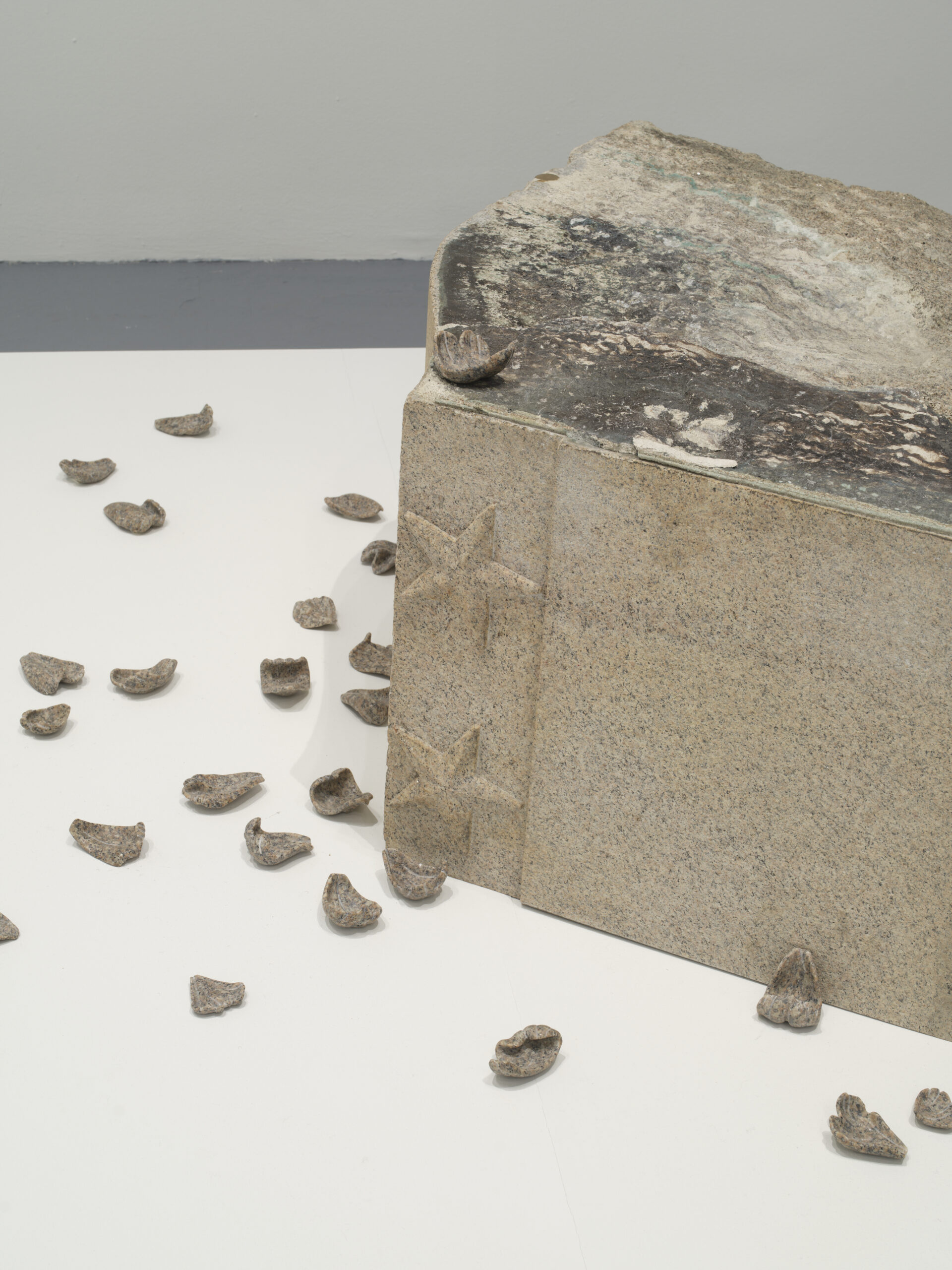
Love is dangerous, 2024-25
Pink granite from the decommissioned Thomas J. "Stonewall" Jackson monument, Charlottesville, Virginia
Re-carved by Sean Hunter Williams
18 x 174 x 96 in. (45.7 x 442 x 243.8 cm) approx.
Commissioned by MOCA & The Brick
Courtesy of the artist; Alexander Gray Associates, New York; and PATRON Gallery, Chicago
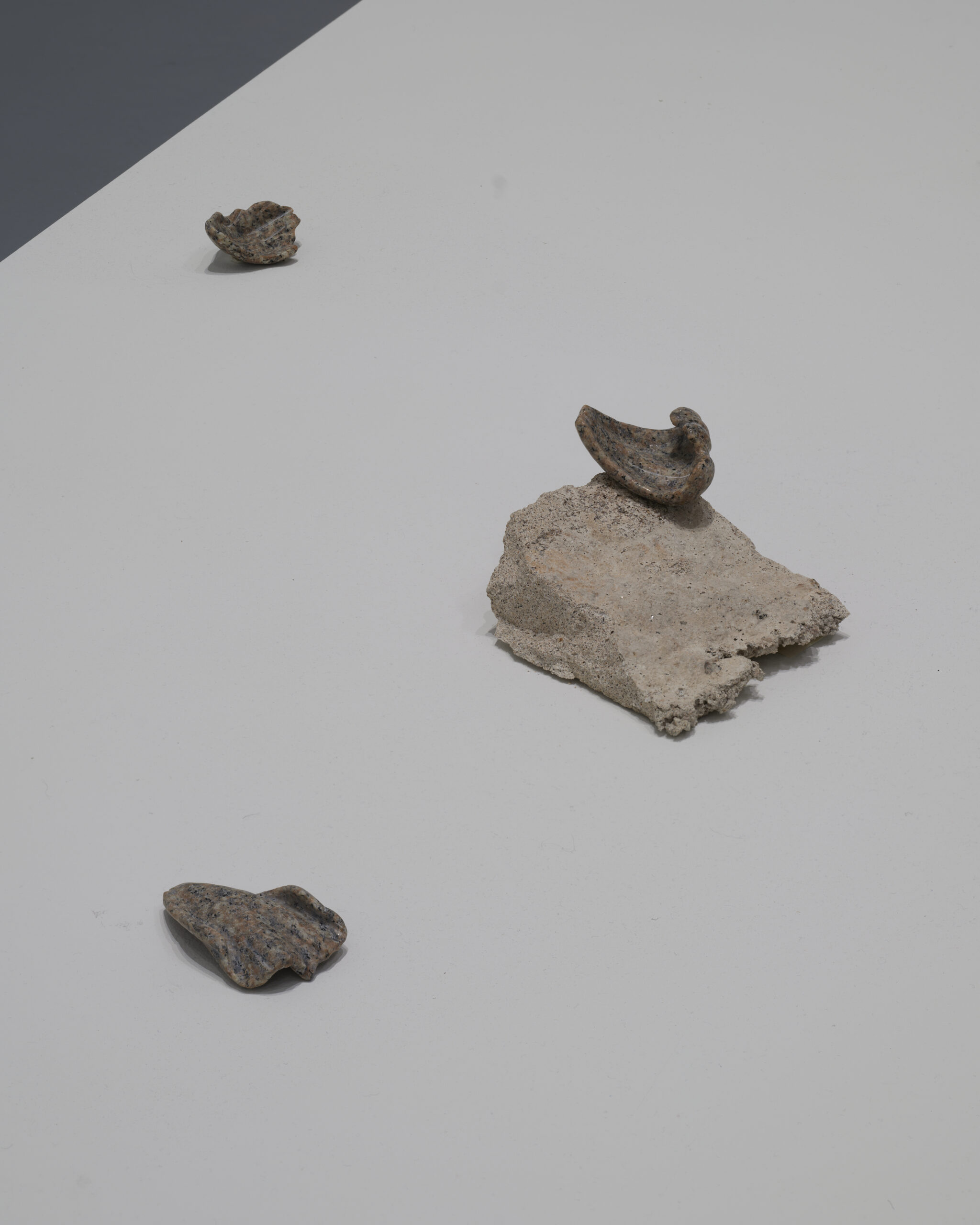
Love is dangerous (detail)
Photo by Frederik Nilsen
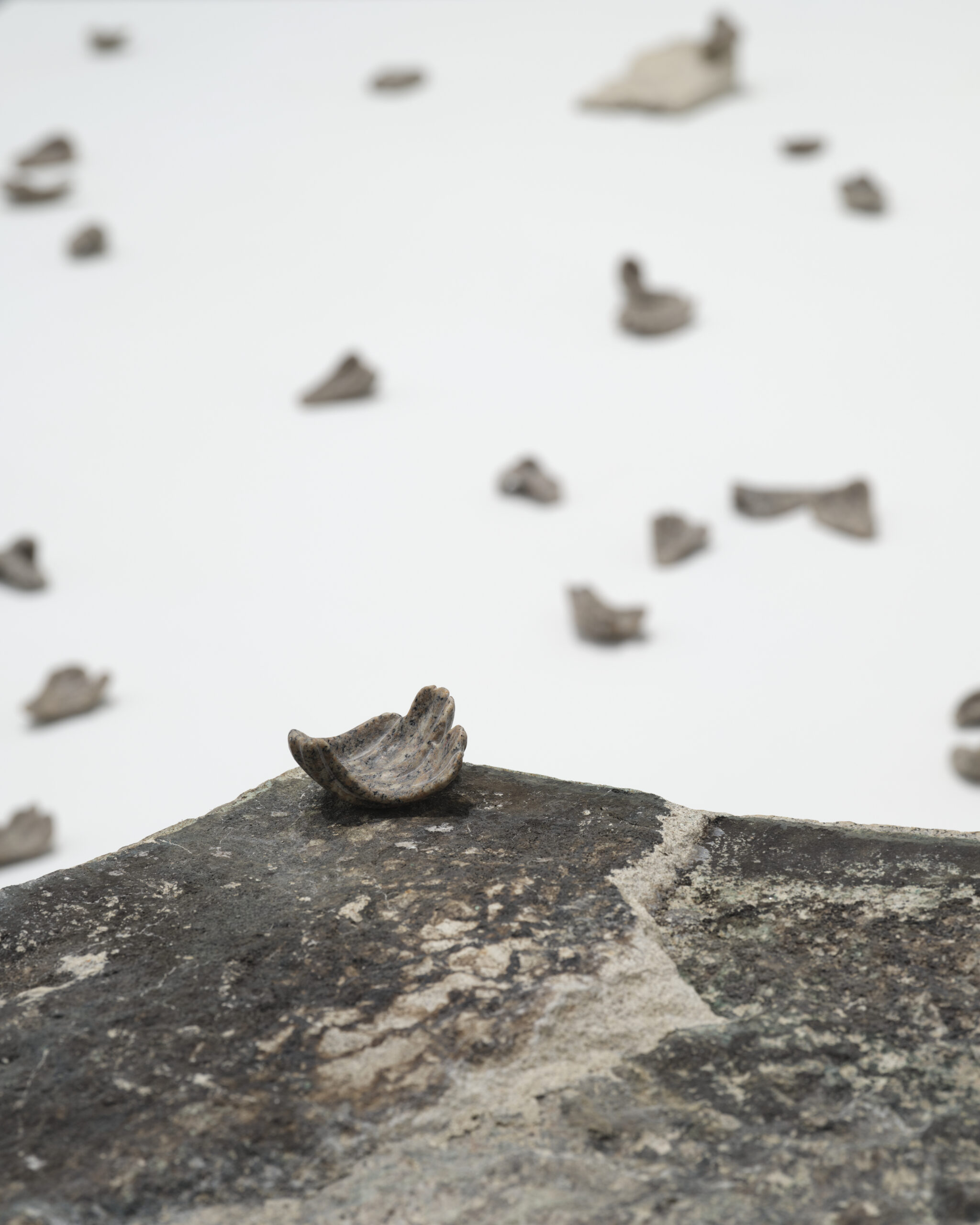
Love is dangerous (detail)
Photo by Frederik Nilsen