

HOMEGOING
HOMEGOING, 2025
Two channel video installation (color; sound)
10:09 minutes
Commissioned by MOCA & The Brick
Courtesy of the artists
Filed Under:
Davóne Tines
(b. 1986, Portsmouth, Virginia)
Julie Dash
(b. 1952, New York; lives in Atlanta)
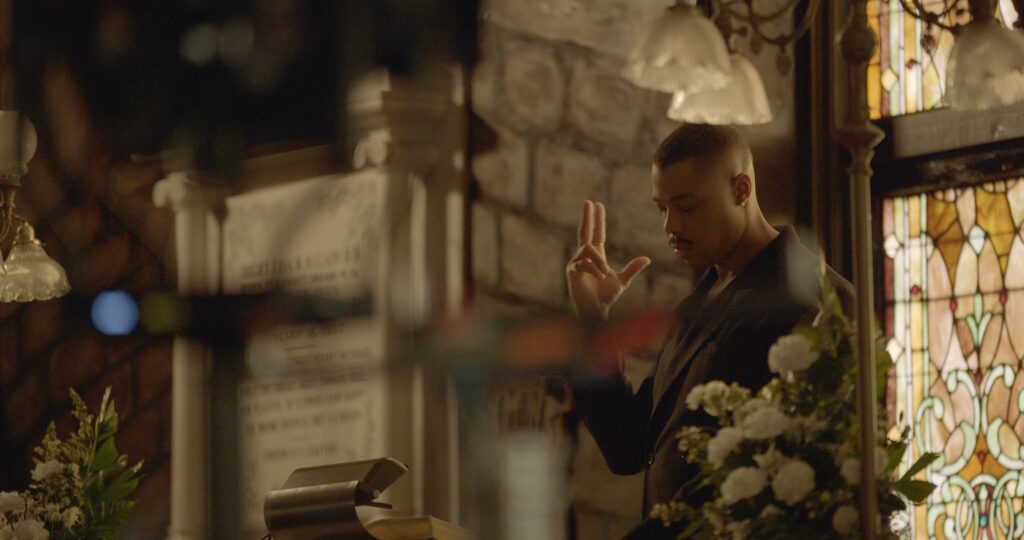
In May 2025, filmmaker Julie Dash captured Davóne Tines’s performance of “Let It Shine” in Mother Emanuel African Methodist Episcopal (AME) Church in Charleston, South Carolina. Dash, whose family roots lie in Charleston, is perhaps best known for her feature film Daughters of the Dust, which tells the story of three generations of Gullah women. Bass-baritone Tines blends opera, spirituals, gospel, and anthems as a means of engaging with historical narratives and challenging the American musical canon. For his 2024 album ROBESOИ, he and his band The Truth (John Bitoy and Khari Lucas) reinterpreted the repertoire of activist, actor, and concert artist Paul Robeson. “LET IT SHINE” is Tines’s rendition of “This Little Light of Mine,” a staple of Robeson’s performances. Written in the 1920s, the song became an anthem of the Civil Rights Movement, sung by activists Fannie Lou Hamer and Zilphia Horton, among others, with lyrics changed to reference present-day struggles.
“LET IT SHINE” begins with the sparse instrumentation of a single piano note and a thumping bass drum. Enter Tines, whose mellifluous, resonant voice follows the solemn, measured tone of the instruments. As described by one critic, this version of Robeson’s classic “has the feel of a work song—its drumbeat a slow and steady thud, its implication that joy and community don’t just happen.” As more and more voices from the choir join in, the song builds to a jubilant crescendo.
HOMEGOING is an intimate filmic portrait of the Mother Emanuel AME Church that speaks to the crucial role of Black churches in the resistance to white supremacy. The AME denomination was founded by Richard Allen (1760-1831) in Philadelphia in 1816 in response to the discrimination that Black members faced in Methodist Episcopal churches. The Charleston branch opened in 1818, but restrictions on Black literacy and gathering led to constant harassment of parishoners. In 1822, the church was burned to the ground after one of its cofounders, the free Black man Denmark Vesey, was caught planning a slave rebellion. White anxiety about Black uprisings forced church members to meet in secret until the structure was rebuilt after the Civil War. The current church was built in 1891 and retains its original dark wood pews, altar, and flooring. Reverend Eric Manning has been pastor since 2016.
On the night of June 17, 2015, Dylann Roof, a twenty-one-year-old avowed white supremacist intent on starting a race war, entered the church. He sat through forty-five minutes of a Bible study with ten Black parishioners before opening fire on the group. Reverend Clementa C. Pinckney (41), Cynthia Graham Hurd (54), Susie Jackson (87), Ethel Lee Lance (70), Depayne Middleton-Doctor (49), Tywanza Sanders (26), Daniel L. Simmons (74), Sharonda Coleman-Singleton (45), and Myra Thompson (59) were murdered. They are now collectively referred to as the Emanuel Nine.
In planning his attack, Roof demonstrated a direct and intentional engagement with history and historical memory. Alongside a manifesto filled with Lost Cause and white-supremacist ideology, his website contained photos of him visiting South Carolina sites associated with slavery and the Confederacy in the months leading up to the shooting. These included Sullivan’s Island, where 40% of all enslaved people were brought to the U.S. via the Middle Passage; several plantations; a Confederate cemetery; and the Sons of Confederate Veterans (SCV) Museum and Library of Confederate History. Though he lived in Columbia, he chose to perpetrate violence in Charleston specifically because he believed it to be the most historic in the state and that at one time it had the highest ratio of Black to white population in the country. “Denmark Vesey” was written on a list of other Black churches found in Roof’s car when he was arrested, signifying that he had some awareness of Mother Emanuel’s history.
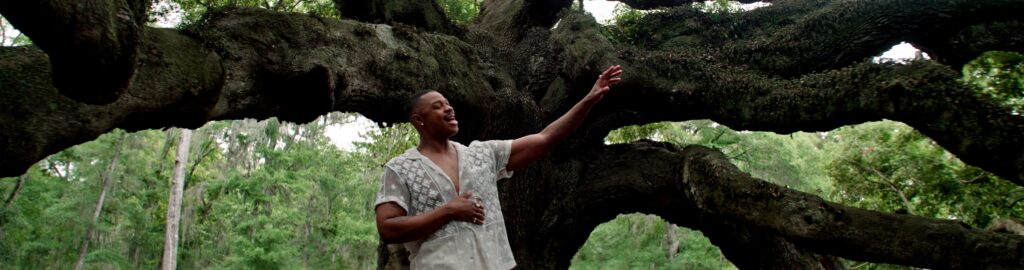
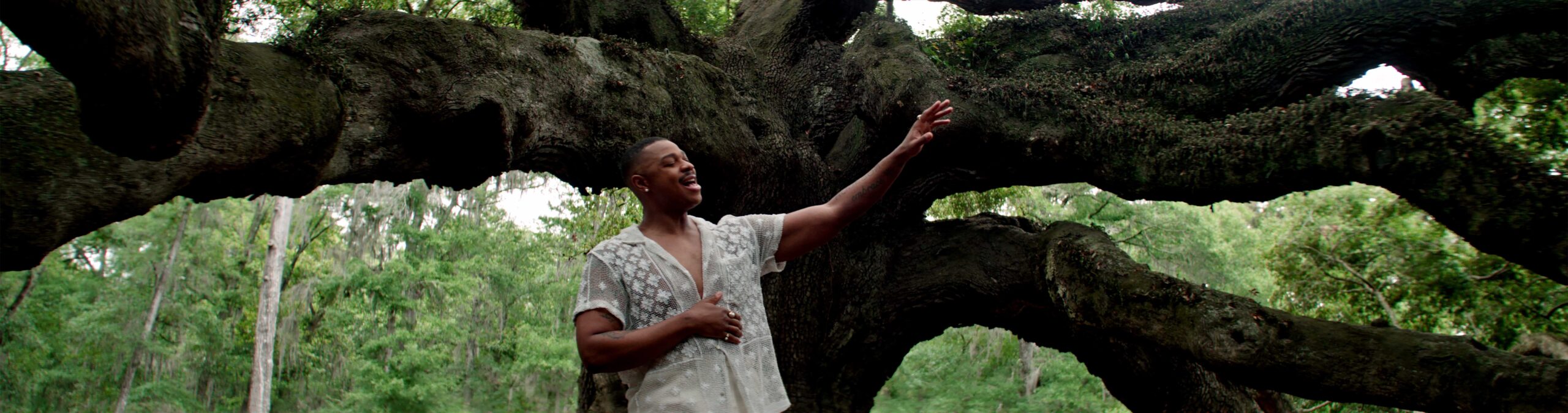
In the context of MONUMENTS, HOMEGOING commemorates the Emanuel Nine and the tenth anniversary of this horrendous event. But Dash and Tines also offer a balm, embodied in the Angel Tree, a 500-year-old live oak tree, whose age makes it a witness to all of U.S. history. Through it all, the tree stands as a symbol of growth, strength, resilience, and ultimately renewal.
Davóne Tines
Davóne Tines is a pathbreaking artist whose work encompasses a diverse repertoire, ranging from early music to new commissions by leading composers, while exploring the social issues of today. A creator, curator, and performer at the intersection of many histories, cultures, and aesthetics, he is engaged in work that blends opera, art song, spirituals, and contemporary classical, gospel, and protest songs as a means to tell a deeply personal story of perseverance connecting to all of humanity.
Tines is an artist who takes full agency of his work, often devising new programs and pieces from conception to performance. He has premiered numerous operas by today’s leading composers, including John Adams, Terence Blanchard, and Matthew Aucoin; his concert appearances include performances of works ranging from Beethoven’s Ninth Symphony to Saariaho’s True Fire. He recently made his Metropolitan Opera debut performing in John Adams’s El Niño. His first studio album, ROBESOИ, released on Nonesuch Records in September 2024, explores his connection to legendary American baritone Paul Robeson, reimagining some of the music Robeson famously sang.
Davóne Tines is Brooklyn Academy of Music’s artist-in-residence and Philharmonia Baroque Orchestra and Chorale’s first-ever creative partner. He is Musical America’s 2022 Vocalist of the Year, a winner of the 2020 Sphinx Medal of Excellence, a recipient of the 2018 Emerging Artists Award from Lincoln Center, and a recipient of the 2024 Chanel Next Prize. He is a graduate of The Juilliard School and Harvard University.
Julie Dash
Thirty–two years ago, filmmaker Julie Dash broke racial and gender boundaries with her Sundance award-winning film (Best Cinematography) Daughters of the Dust. She became the first African American woman to have a wide theatrical release of her feature film. The Library of Congress placed Daughters of the Dust and her UCLA MFA senior thesis, Illusions, in the National Film Registry. These two films join a select group of American films preserved and protected as national treasures by the Librarian of Congress.
A recent poll of international film critics and the British Film Institute have ranked Daughters of The Dust #60 out of the 100 Greatest Films Ever Made.
Julie Dash is known for her visual investigations of issues racial justice, diasporic identities, migration and black women across films, video and museum installations. A Dash of Excellence was held at the International African American Museum in Charleston, SC. In 2024. Seeking: Mapping Our Gullah Geechee Story, written and directed by Dash and produced by the Ummah Chroma Creatives, opens in the International African American Museum in Charleston, SC. In this same connection, Julie Dash awarded Joseph R. Biden’s President’s 2022 Lifetime Achievement Award for a lifelong commitment to building a stronger nation, the highest civilian honor for volunteer service in the United States.
Dash designed several rooms for the Metropolitan Museum of Art and VOGUE, In American: An Anthology of Fashion, featured at the NYC Met Gala 2022. She produced and directed a promotional fashion film for VOGUE magazine online with Chloe x Halle. Her recent television episodic work includes Reasonable Doubt seasons one and two for Disney+/ Hulu, the ABC limited series Women of The Movement, Our Kind of People for FOX/Hulu, and Queen Sugar for OWN TV.
Dash hosted The Golden Years, a series for Turner Classic Movies. Before that, she delivered the Rajiv Vaidya Memorial Lecture for the National Gallery of Art. She was a presenter with Angela Davis for the Princeton University Combahee Experiment and the Academy Dialogues with Ava DuVernay and Euzhan Palcy. She was the moderator for Conversations That Matter with Nikole Hannah-Jones and a panelist for The Directors Guild of America. Dash is the recipient of the Special Award at the 82nd New York Film Critics Circle, the 2017 Women & Hollywood Trailblazer Award, the 2017 New York Women in Film & Television MUSE Award, The Ebert Award, and inducted into the Penn Cultural Center’s 1862 Circle on St. Helena Island.
Dash has written and directed for CBS, BET, ENCORE STARZ, SHOWTIME, MTV Movies, HBO, DISNEY’S HULU and OWN Television. Her long-form narrative films include the NAACP Image Award-winning, Emmy, DGA nominated, The Rosa Parks Story, Incognito, Funny Valentines, Love Song, and Subway Stories: Tales From The Underground. Her work as a film director includes museum and theme park exhibits and design for Disney’s Imagineering, Brothers of the Borderland for The National Underground Railroad Freedom Center Museum, and Smuggling Daydreams into Reality at the Indianapolis Museum of Art. Her most recent museum installations include Standing at The Scratch Line at the Philadelphia Museum of African American History and the Philadelphia Museum of Art and Shine a Light, a large-scale video mapping projection for the Charles H. Wright Museum in Detroit.
Dash has several documentary projects in the works, including Travel Notes of a Geechee Girl, a feature-length documentary in progress about Vertamae Smart Grosvenor, a world-renowned author, performer, and chef from rural South Carolina.
Julie Dash is a Fulbright Scholar who earned a BA in Film Studies from the City University of New York, an MFA in Screenwriting at the American Film Institute’s Center for Advanced Film Studies, and an MFA in Theater Arts (Film & Television Production) at UCLA.
Julie Dash is the Diana King Endowed Professor in the Department of Art & Visual Culture at Spelman College.
Directors Guild of America (DGA)
Academy of Motion Picture Arts & Sciences (AMPAS)
Represented by Creative Artists Agency (CAA), Los Angeles, CA.
HOMEGOING, 2025
Two channel video installation (color; sound)
10:09 minutes
Commissioned by MOCA & The Brick
Courtesy of the artists 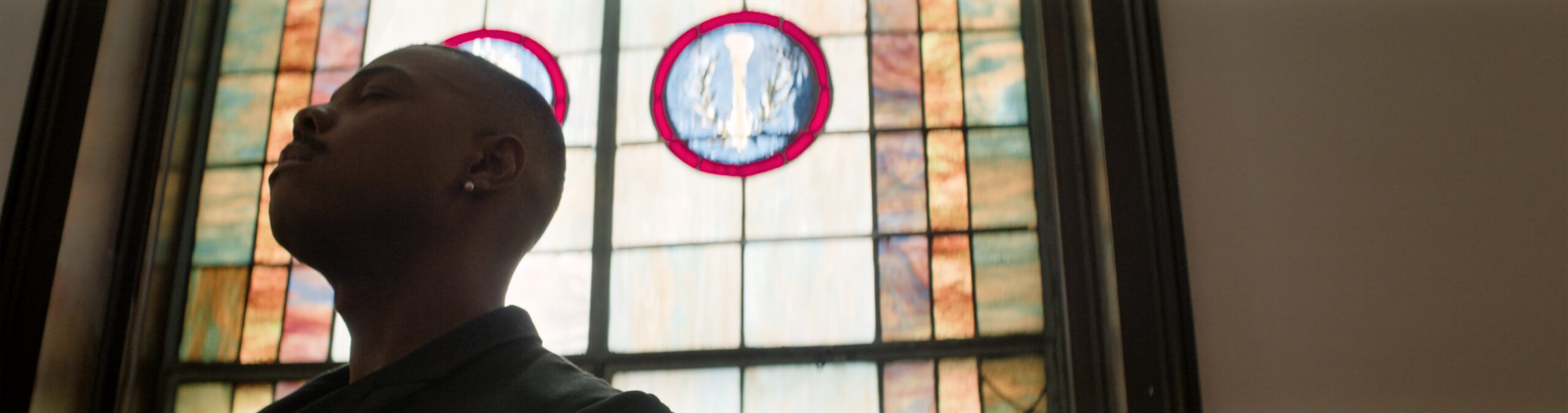
HOMEGOING (still), 2025 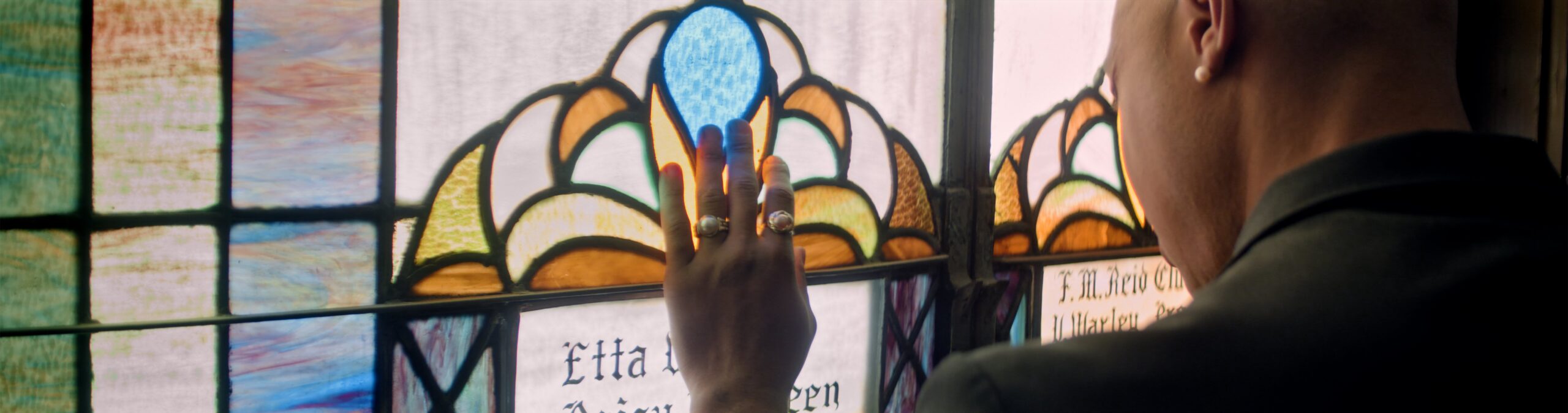
HOMEGOING (still), 2025 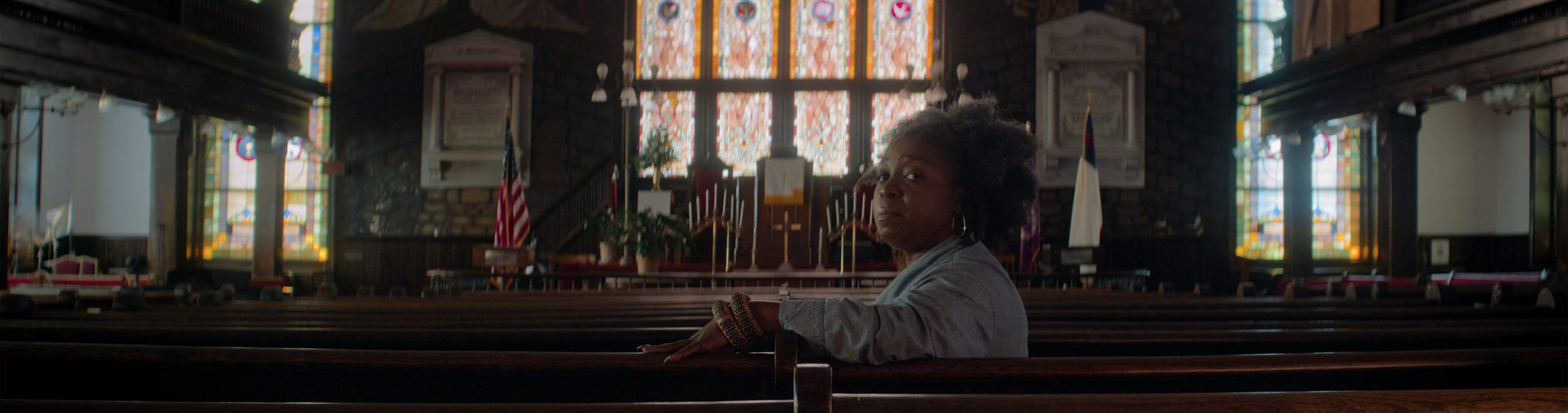
HOMEGOING (still), 2025 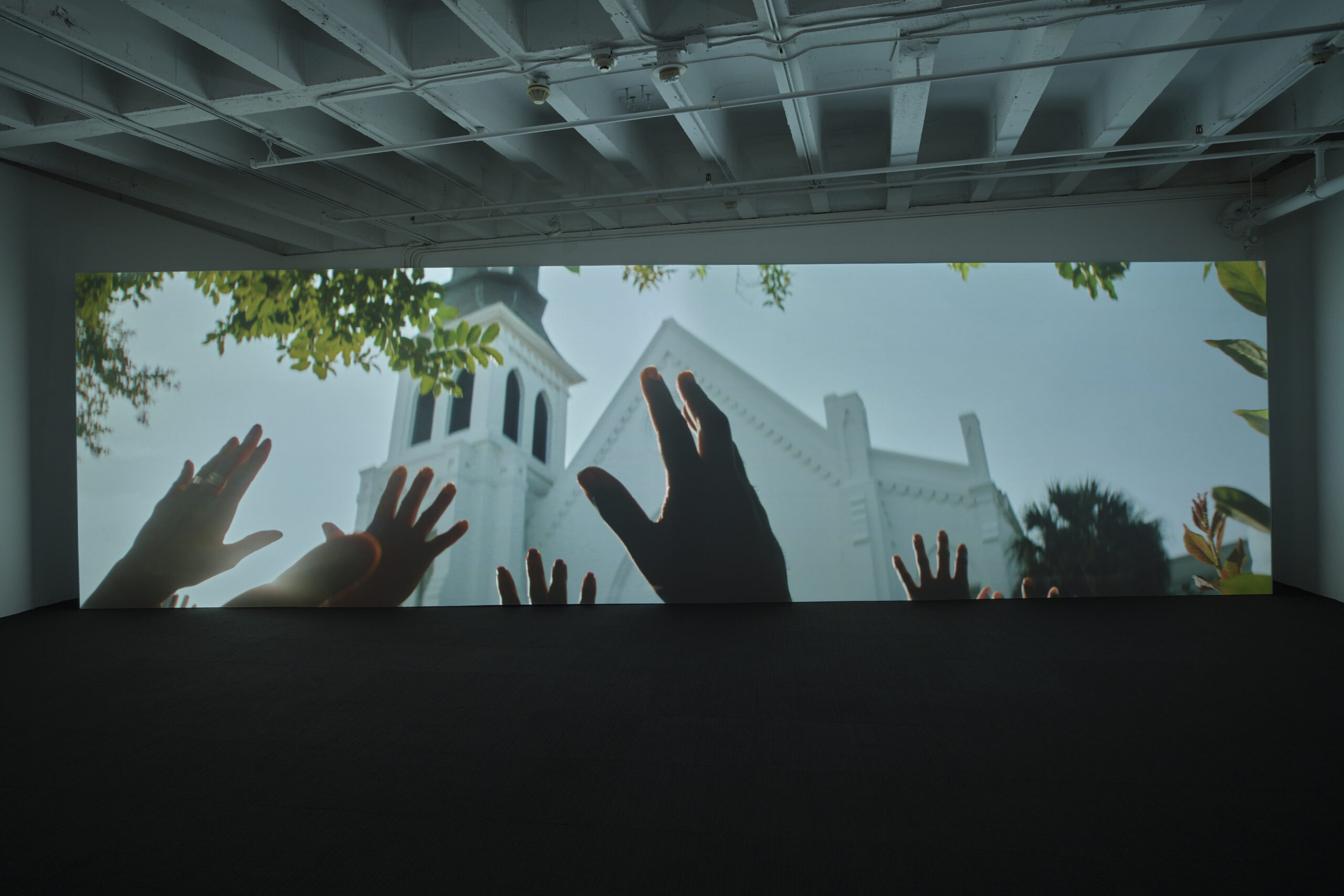
HOMEGOING (installation), 2025
Photo by Frederik Nilsen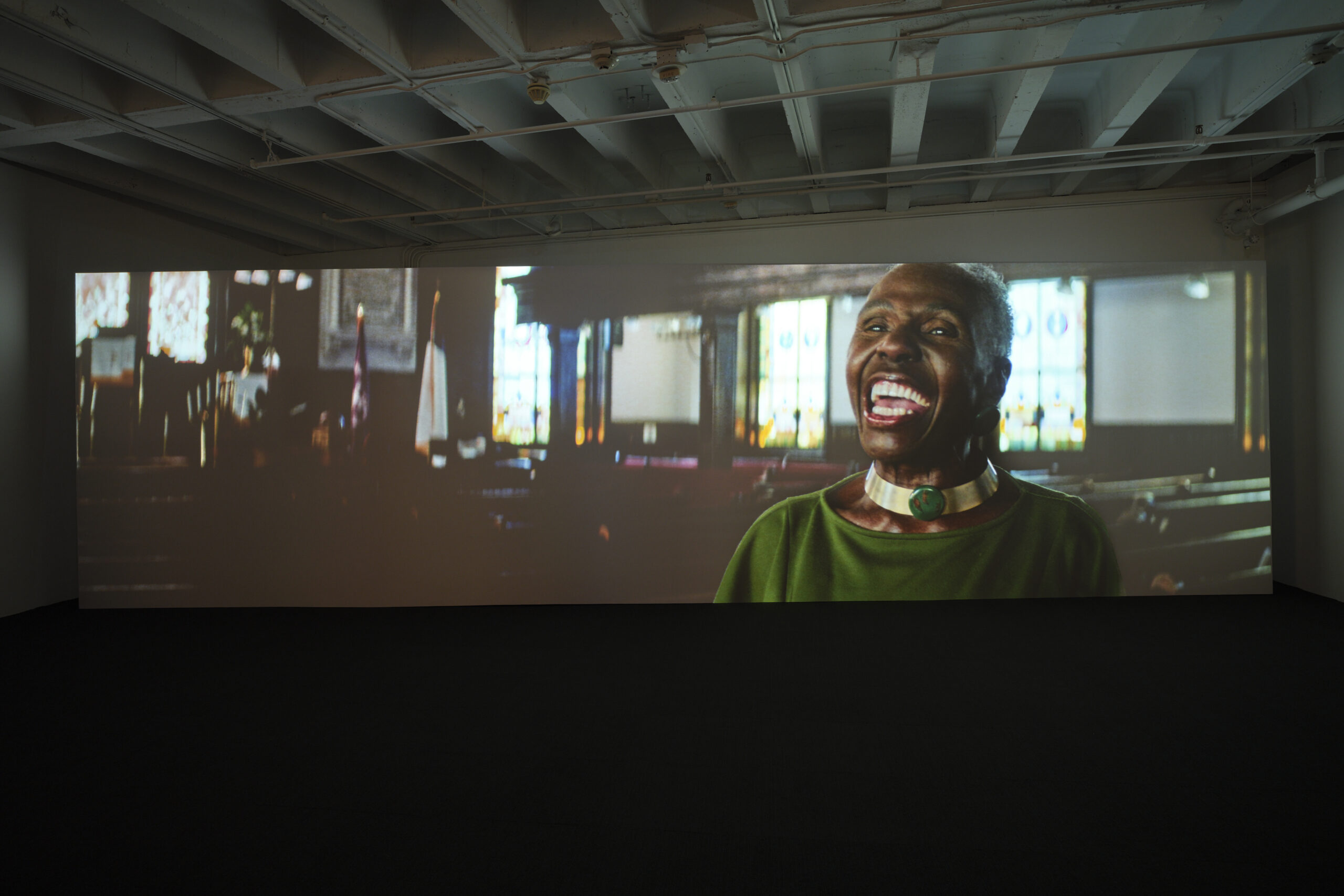
HOMEGOING (installation), 2025
Photo by Frederik Nilsen